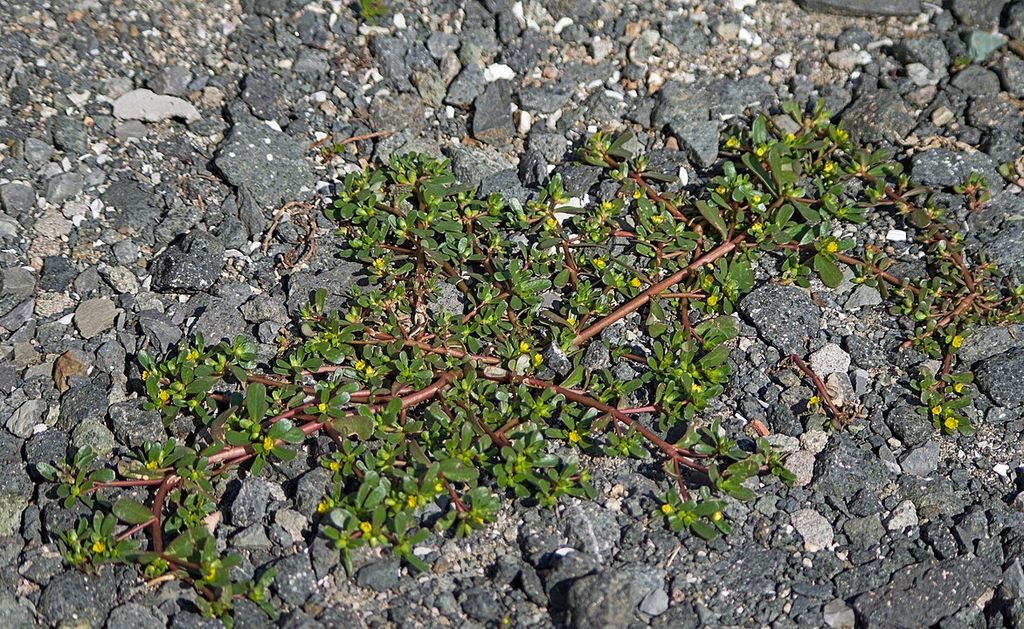
Nutsedge, often called nutgrass, is the most frustrating weed in American lawns, and not just because it’s ugly.
It’s a sedge, not a grass, which means regular lawn weed killers don’t touch it. If you’re seeing fast-growing, light-green blades that shoot up overnight after mowing, that’s nutsedge.
Here’s the best nutsedge killer and how to use it.
This post contains affiliate links. As an Amazon Associate, I earn from qualifying purchases at no additional cost to you.
Characteristics of Nutsedge
Weed Status:
Yellow nutsedge (Cyperus esculentus) and purple nutsedge (Cyperus rotundus) are perennial sedges that are among the most difficult lawn weeds to control. They outcompete grass in heat and poorly drained soil, and they reproduce from underground tubers (the “nuts”) that can stay viable in soil for years.
Growth Habit:
Nutsedge spreads by three methods: seeds, underground rhizomes, and tubers. Pulling the plant above ground does nothing, the tubers simply send up a new shoot. It’s the one lawn weed that laughs at regular weed-and-feed products.
Appearance:
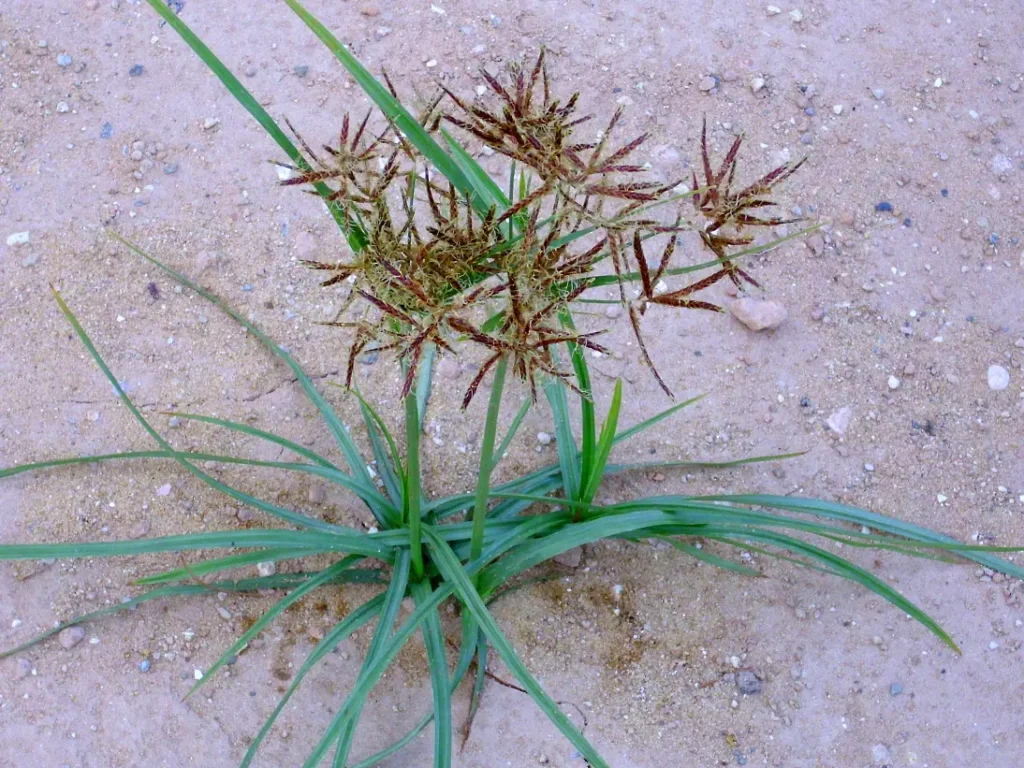
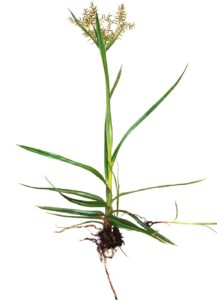
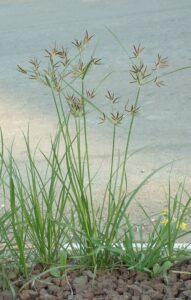
Light green, waxy, V-shaped blades that grow in a distinct triangular cross-section (roll one between your fingers — grass is flat, nutsedge is triangular). It grows taller and faster than lawn grass, often appearing a day after mowing. Yellow nutsedge has a yellowish seed head; purple nutsedge has a reddish-brown one.
Climate Suitability:
Nutsedge thrives in hot, humid summers. Its active season runs from late spring through early fall. It loves moist, poorly drained soil, which is why it first appears in low spots and near downspouts.
Soil Preference:
Compacted, wet, poorly drained soil is nutsedge’s home turf. Fixing drainage and aerating are long-term controls. But for the weed already in your lawn, you need a real nutsedge killer.
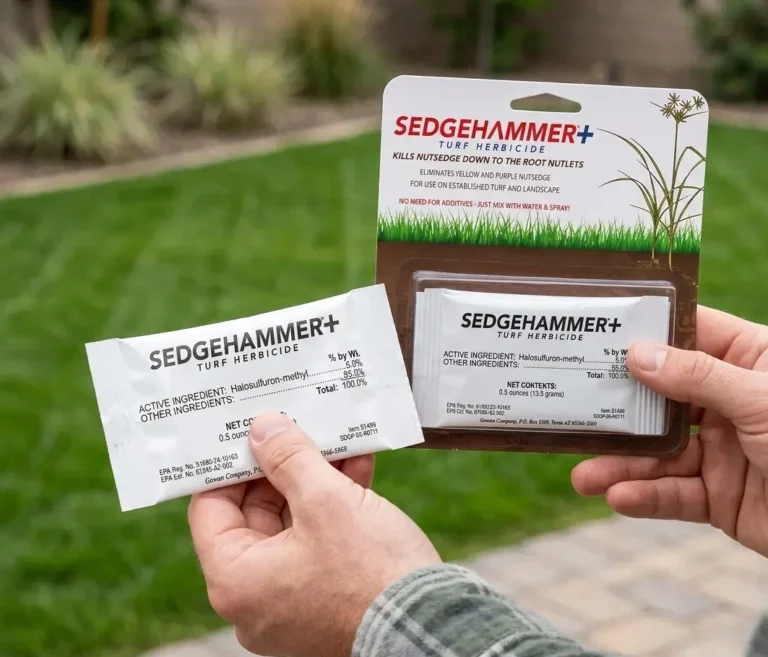
Best Nutsedge Killer: Sedgehammer Plus (Halosulfuron)
Mode of Action:
Herbicides with halosulfuron (Sedgehammer) or sulfentrazone (Ortho Nutsedge Killer) are absorbed through nutsedge leaves and move systemically down to the tubers, the only way to actually kill it. Broadleaf weed killers (2,4-D, dicamba) don’t work on sedges; that’s why they keep coming back.
Effectiveness:
Halosulfuron is the gold standard for yellow nutsedge. Expect visible yellowing within 1–2 weeks and tuber death within a month. Sulfentrazone works faster on contact but may need a follow-up application. Both are safe for most lawn grasses when applied per label.
Best Use:
Apply in early summer when nutsedge is actively growing (before it starts forming new tubers in mid-to-late summer). Spot-treat clumps, wait 3–4 weeks, and reapply. One application rarely kills every tuber. Don’t mow for 2 days before or after.
Tips for Using a Nutsedge Killer:
- Add a non-ionic surfactant (or a drop of dish soap) so the product sticks to the waxy blades. Sedgehammer’s pre-mixed packets already include one.
- Time it before the 4th of July. Nutsedge starts banking new tubers mid-summer.
- Mark treated clumps with a golf tee: yellowing takes up to 2 weeks and it’s easy to double-apply.
- Combine with drainage fixes so it doesn’t return next year.
How to Kill Nutsedge Naturally
1. Boiling Water (Small Patches)
Pour boiling water directly onto the clump. It kills the top growth and weakens the tuber. Repeat every few days through the season. Works for small patches but impractical for a full lawn.
2. Vinegar + Dish Soap
Horticultural vinegar (20% acetic) with dish soap burns nutsedge foliage on contact. It won’t reach deep tubers, so expect regrowth, but repeated burning exhausts the tuber over a season. Keep it off the grass.
3. Smother It (Solarization / Cardboard)
For bare-soil patches: clear plastic sheeting for 4–6 weeks in summer heat, or thick cardboard + mulch. This starves the tubers. Reclaim the spot with dense grass afterward.
4. Fix the Drainage
Nutsedge loves wet, compacted soil. Core aerate, fix downspout runoff, and raise low spots. Healthier, denser grass is the only long-term natural control.
Why Nutsedge Keeps Coming Back
- Tubers survive — one plant can produce hundreds of tubers, viable for up to 3 years.
- Wrong herbicide — broadleaf weed killers don’t kill sedges. You need halosulfuron or sulfentrazone.
- Mowing spreads it — mower blades carry tubers and rhizomes to clean parts of the lawn.
F.A.Q
What is the best nutsedge killer for lawns?
Sedgehammer (halosulfuron) is the most reliable for yellow nutsedge; Ortho Nutsedge Killer (sulfentrazone) works faster and is easier to find. Both kill the tubers, which is what actually stops nutsedge.
Does vinegar kill nutsedge?
It burns the foliage but not the tubers. Use it as a repeated spot treatment. Several burns over a season will exhaust even established tubers.
Why does my nutsedge keep coming back after pulling it?
Because you’re only removing the above-ground plant. Tubers and rhizomes remain underground and resprout within days. Herbicide or repeated natural treatment is required to reach the tubers.
Is nutsedge a sign of poor lawn health?
Often, yes. It thrives in wet, compacted, thin turf. Fix drainage and overseed, and the grass will outcompete new nutsedge.