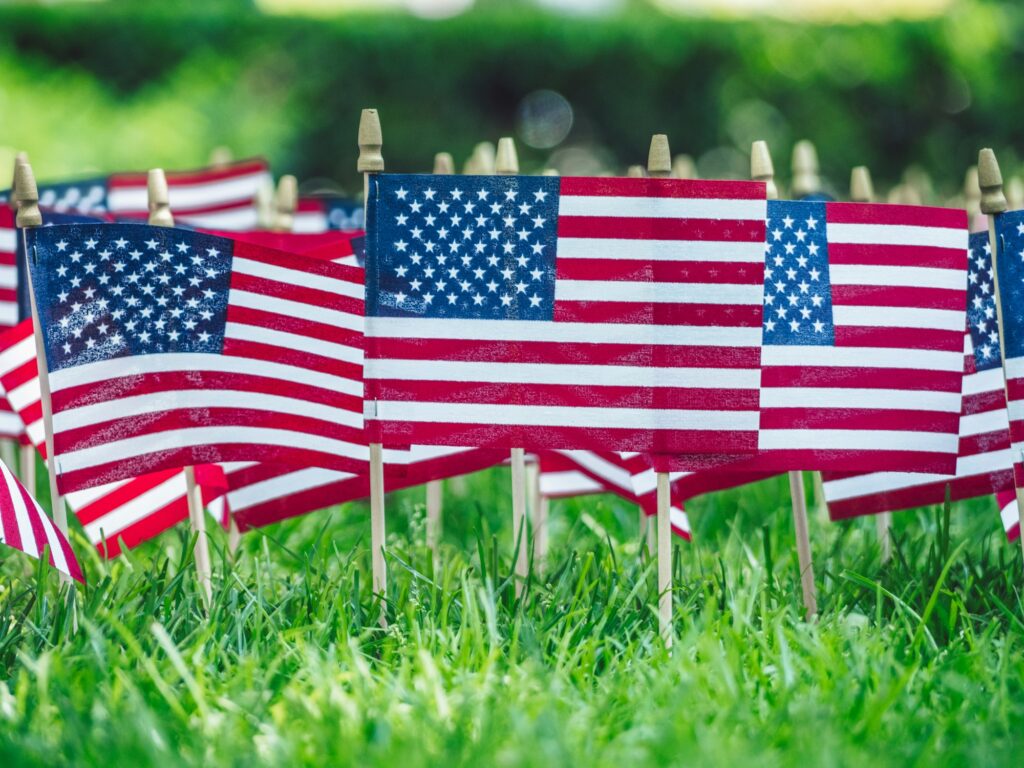
Every July 4th, millions of Americans gather on lush green lawns to celebrate independence day USA with barbecues, fireworks, and family festivities. But have you ever stopped to consider the connection between what is independence day and the manicured grass beneath your feet?
The story of the American lawn is, in many ways, the story of America itself—a journey from European elitism to democratic accessibility, from wartime duty to peacetime celebration.
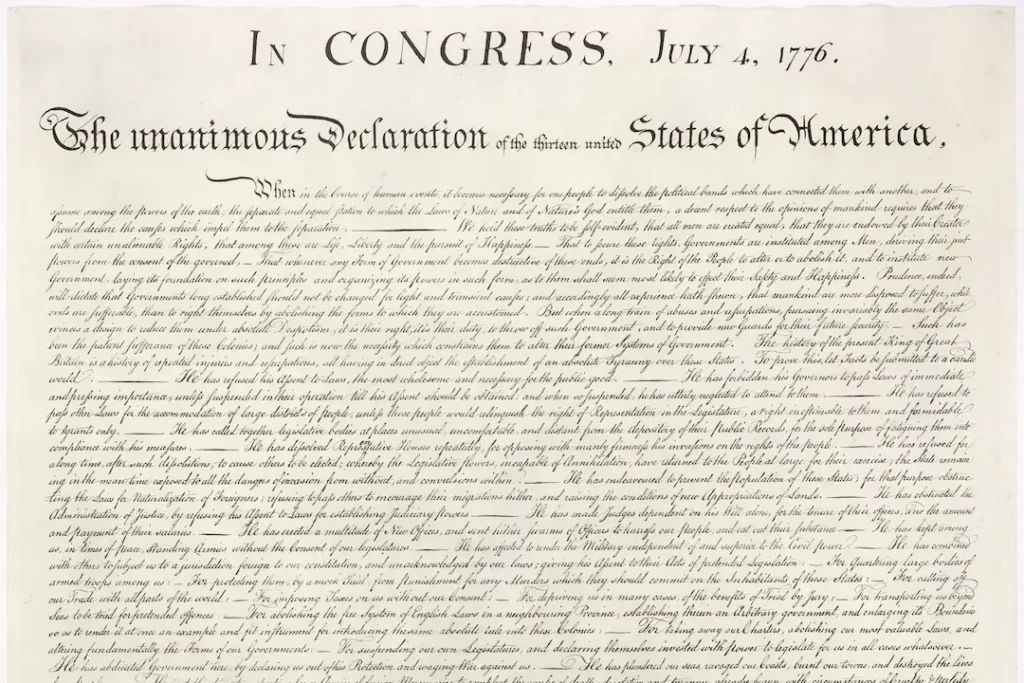
Independence day history begins on July 4, 1776, when the Continental Congress adopted the Declaration of Independence, announcing the separation of the 13 North American colonies from Great Britain. Yet the lawn meaning in America has evolved just as dramatically over the centuries.
What began as a status symbol for European aristocrats transformed into a democratic emblem of homeownership and, eventually, the backdrop for the quintessential fourth of july backyard gathering.
The Declaration of Independence and the Birth of a Nation
What Is Independence Day?
Independence Day (United States) is the annual federal holiday commemorating the adoption of the Declaration of Independence on July 4, 1776. The Continental Congress had actually voted in favor of independence from Great Britain on July 2, but the final revision and adoption of the Declaration—drafted primarily by Thomas Jefferson in consultation with John Adams, Benjamin Franklin, Roger Sherman, and William Livingston—occurred two days later.
Q: What happened on July 4, 1776?
A: On July 4, 1776, the Second Continental Congress unanimously adopted the Declaration of Independence, formally announcing that the 13 American colonies were no longer subject to British rule.
The Declaration of Independence states three foundational ideas:
- God made all men equal and gave them the rights of life, liberty, and the pursuit of happiness
- The main business of government is to protect these rights
- If a government tries to withhold these rights, the people are free to revolt and establish a new government
In 1870, the U.S. Congress made Independence Day an unpaid holiday for federal workers, and in 1938 it became a paid federal holiday. Today, the fourth of july is celebrated with parades, fireworks, picnics, concerts, and patriotic displays of the American flag.
Early American Celebrations
The first Independence Day celebrations modeled the festivities previously held for the British king’s birthday, featuring bell ringing, bonfires, solemn processions, and oratory. In 1777, thirteen gunshots were fired at morning and evening on July 4 in Bristol, Rhode Island. In 1778, General George Washington marked July 4 with a double ration of rum for his soldiers and an artillery salute.
The Origins of the American Lawn
From European Elitism to American Accessibility
The concept of the well-maintained lawn dates back to 18th-century Europe, particularly England and France, where lawns were a symbol of wealth and leisure. In medieval Europe, lawns served practical and status-driven purposes:
- Castle dwellers needed tall grass cut by scythes to see approaching enemies
- Landowners with livestock required fields cut to grazing height
- Wealthy individuals tamed nature into neatly trimmed surfaces for golf, tennis, and lawn bowling
The word “lawn” derives from the Middle English word launde, which originally referred to communal grazing spaces in Medieval France and England. The term “lawn” being used to mean a manicured grassy area was first recorded in 1733 in Europe, where lawns remained a status symbol of great wealth.
The Lawn Comes to America
In both the 18th and 19th centuries, the lawn was perceived as a sign of improved or “cultivated” space in America. Former presidents George Washington and Thomas Jefferson had lawns, though these were not the perfect greenswards we know today.
Frederick Law Olmsted, best known as the landscape architect of New York’s Central Park, played a pivotal role in democratizing the American lawn. In 1868, he received a commission to design Riverside, Illinois—one of America’s first planned suburban communities. Each house was set 30 feet back from the street, and unlike English homes separated by high walls, Riverside’s yards were open and connected, giving the impression of one manicured lawn accessible to everyone.
Architectural historian Georges Teyssot noted that Olmsted “seems to have wanted to blur the line between private yards and public spaces”. As New York Times journalist Michael Pollan wrote in 1989, lawns came to unify and define the American landscape: “France has its formal, geometric gardens, England its picturesque parks, and America this unbounded democratic river of grass”.
The Post-WWII Suburb and the American Dream

The G.I. Bill and the Rise of Homeownership
The modern American lawn as we know it—a weed-free, perfectly manicured green carpet—is a relatively recent phenomenon, largely tracing its beginnings to the post-World War II era.
In 1944, President Franklin Roosevelt signed the Servicemen’s Readjustment Act, better known as the G.I. Bill, providing educational and home loan benefits for millions of veterans returning from World War II. The program backed 2.4 million low-interest home loans for veterans between 1944 and 1952.
As homeownership rates rose from 44 percent in 1940 to nearly 62 percent in 1960, owning a home became synonymous with the American Dream. And with that home came a lawn.
Q: How did the lawn become a symbol of the American Dream?
A: With the rise of suburbia in post-WWII America, the perfect lawn became a potent symbol of the American Dream—expressing the national ideal that homeownership and a patch of land could be within reach for every American through hard work and sacrifice.
Levittown and the Standardization of the Lawn
The iconic suburban development of Levittown, New York, became the template for postwar American suburbia. The Levitt family, who built 17,000 homes between 1947 and 1951, viewed landscaping as a form of “neighborhood stabilization” and a way of bolstering property values.
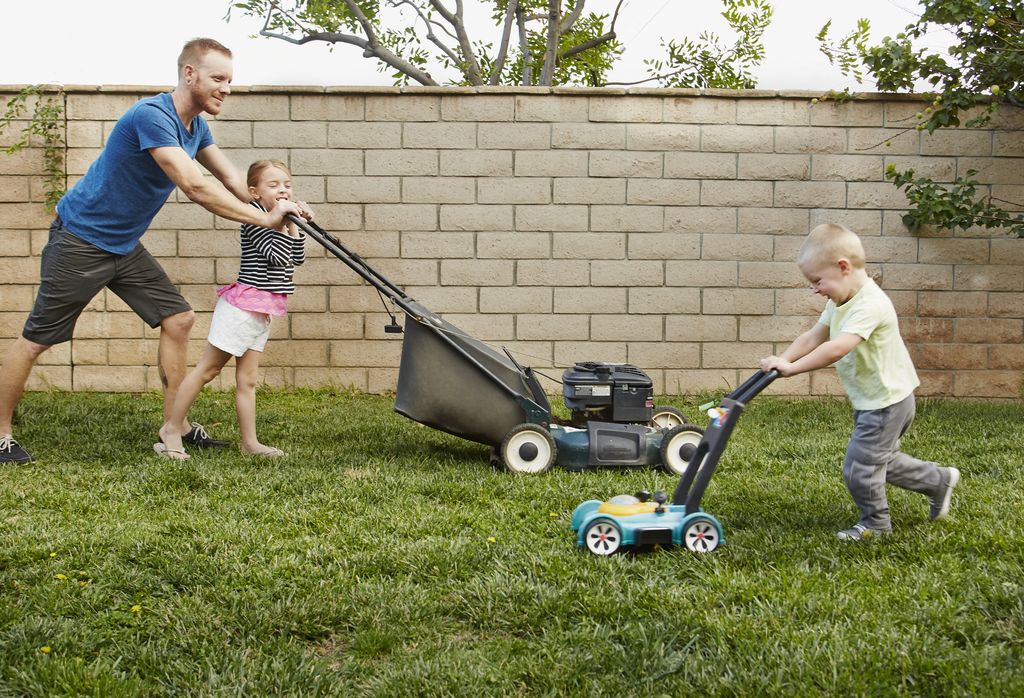
The Levitts insisted that homeowners mow their yards once a week between April and November, including this stricture in covenants accompanying their deeds. However, Abraham Levitt famously noted, “I don’t believe in being a slave to the lawn,” adding that clover was “just as nice” as grass.
The Engineering of the Perfect Lawn
The quest for the perfect lawn did not come naturally—it had to be engineered. The Scotts Company of Marysville, Ohio, took agricultural chemicals and created concoctions that homeowners could spread over their yards.
One critical factor drove this industry: turfgrass is not native to North America. Growing it on the continent has always been an uphill ecological battle, meaning homeowners needed significant help in their quest for perfection. Scotts tapped into postwar trends in brightly colored consumer products to help lodge the idea of perfect turf in the American imagination.
In these new tract home suburbs, perfectly trimmed grass lawns gave the impression of united, well-kept communities. Companies quickly responded with products designed to lessen the burden of yard work, including hybrid grasses, herbicides, pesticides, automated sprinkler systems, and newly affordable lawn mowers.
The Lawn as National Duty
Wartime Symbolism
During World War II, the lawn took on profound new meaning. Popular household magazines such as House Beautiful and Life propagated images of idealized homes, always presented with manicured lawns and perfectly tended flowerbeds. This was the image that American soldiers were dreaming of returning to—so maintaining it became a matter of national duty.
Architectural historian Beatriz Colomina observed that during World War II, “the lawn became a battlefield. Maintaining the lawn was a form of war, a national duty performed for the morale of both those at home and those in the armed forces”. Articles of the time depicted the lawn as a site of battle, where weeds, pests, and drought were presented in almost military terms as enemy combatants to be overtaken.
The Postwar Backyard Revolution
After the war, the shift to backyards moved leisure time to a more private arena. A blurring of indoor and outdoor space occurred as patios and sliding glass doors invited homeowners to treat the yard as an extension of their family room.
The postwar backyard culture encompassed:
- Patios and outdoor entertaining spaces
- “The thrill of the grill” and barbecue culture
- Gardening and lawn maintenance
- The pressure to have a perfect lawn matching the neighbors
- The growth of private pools and swing sets
The 4th of July Backyard Celebration

How Backyard Culture Became Central to Independence Day
As the suburban lawn became ingrained in American life, it naturally became the setting for the nation’s most important secular holiday. The 4th of july history is inseparable from the story of the American backyard.
Q: Why do Americans celebrate the 4th of July with backyard barbecues?
A: The backyard barbecue tradition on Independence Day evolved from 19th-century political barbecues, which Southern Democrats often hosted on July 4 even before it became a national holiday. By the postwar era, the private lawn had become the perfect venue for family gatherings, blending patriotic pride with the comforts of home.
By the 1950s and 1960s, the fourth of july had transformed into a celebration centered around:
- Liberty, independence, and the spirit of a country built on freedom
- Backyard barbecues with hot dogs and hamburgers
- Family gatherings in extended family backyards
- Patriotic decorations in red, white, and blue
- Fireworks displays visible from suburban lawns
The July 4th Lawn Care Rush
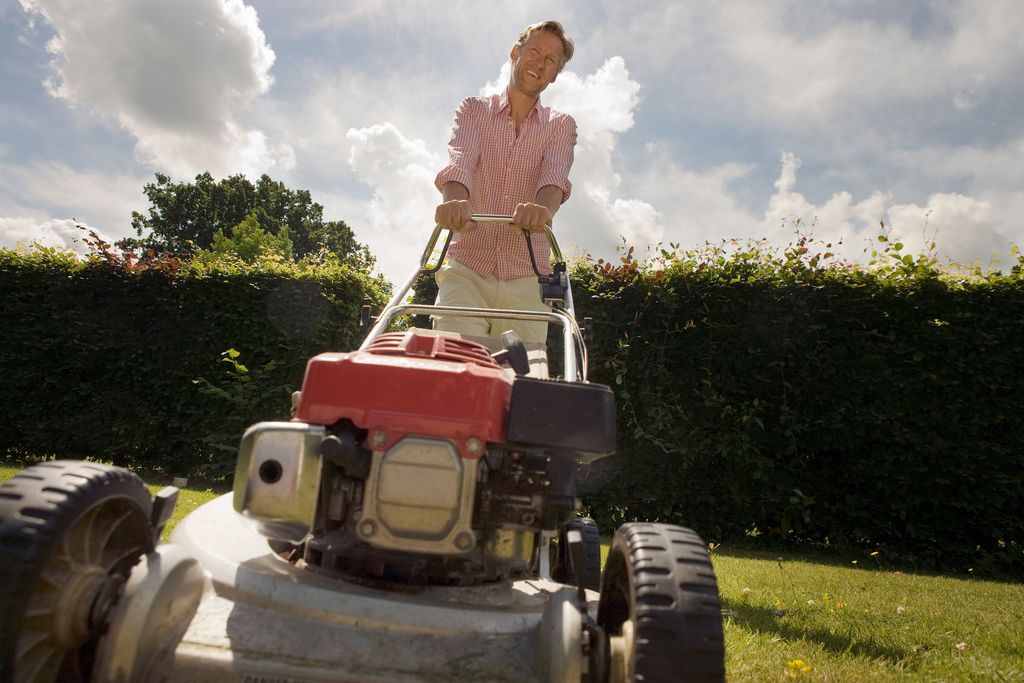
The connection between lawns and Independence Day is so strong that it has created measurable patterns in lawn care. July 3rd is lawn care’s busiest day of the year.
According to data from LawnStarter:
- Grass growth peaks for half of the nation in July, requiring more frequent mowing
- Lawn care pros completed 12,050 mows on July 3, 2025—32.1% busier than the average summer day
- The July 3rd surge more than doubled average daily mowing jobs in cities like Madison, Wisconsin (+164%), Toledo, Ohio (+120%), and Rochester, New York (+108%)
- The two weeks leading up to Independence Day were 4.5% busier than the average summer period
This last-minute rush reflects a simple truth: Americans want their lawns looking their best for the biggest backyard celebration of the year.
The White House Lawn Tradition
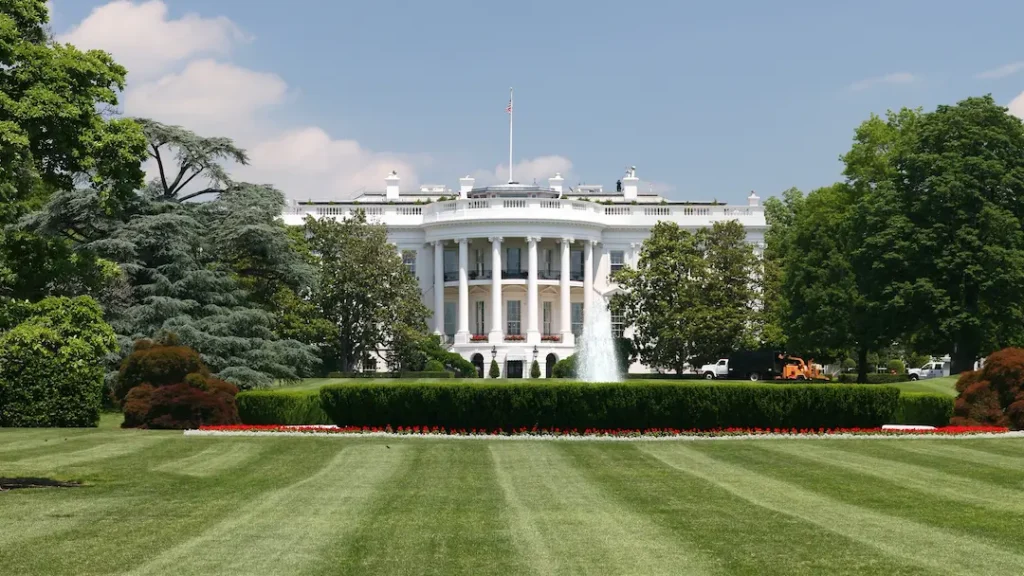
Even the nation’s most famous lawn plays a role in independence day USA celebrations. Presidents have long hosted Fourth of July cookouts and fireworks displays on the White House lawn. This tradition, revisited by presidents from Jimmy Carter and Gerald Ford to George W. Bush and Donald J. Trump, symbolizes the connection between American leadership and the democratic ideal of gathering on the grass.
The Lawn as a Symbol of American Identity
The Democratic River of Grass
The American lawn evolved from European elitism to something uniquely democratic. Unlike the formal, geometric gardens of France or the picturesque parks of England, the American lawn represented openness, accessibility, and the possibility that anyone could achieve homeownership.
Beatriz Colomina notes that since World War II, the lawn has taken “a central space in the imagination of the country,” first as a symbol of the stability soldiers hoped to return to, and later propagating an idealized lifestyle maintained with hard work and dedication.
The Lawn and the 4th of July—An American Story
The independence day history and the history of the American lawn are deeply intertwined. Both trace their origins to European traditions, both were transformed by American ideals of democracy and accessibility, and both reached their modern form in the postwar era of suburban expansion.
Today, when Americans gather on their lawns for fourth of july celebrations, they are participating in a tradition that connects them to:
- The revolutionary spirit of 1776
- The postwar dream of homeownership
- The cultural evolution of the backyard as a space for family, freedom, and festivity
From the Declaration of Independence to the suburban lawn, from the G.I. Bill to the backyard barbecue, the story of July 4th is the story of America itself—a nation always striving, always growing, and always finding new ways to celebrate its independence on the green grass of home.