I’ve aerated hundreds of lawns over 30 years. If there’s one practice that consistently transforms a struggling lawn into a thriving one, it’s core aeration.
But most homeowners either skip it entirely or do it wrong: aerating at the wrong time, with the wrong tool, or without following up afterward.
This guide covers every method, the exact steps, and what to do after so you get results you can see.
This post contains affiliate links. As an Amazon Associate, I earn from qualifying purchases at no additional cost to you.
What Is Lawn Aeration?
Lawn aeration is the process of creating small holes in the soil to allow air, water, and nutrients to reach the grassroots. Most lawns, especially those with heavy foot traffic, clay soil, or years of thatch buildup, suffer from soil compaction. The soil particles are pressed together so tightly that roots can’t breathe or grow.
Aeration relieves that compaction. Think of it as unclogging the pores of your lawn.
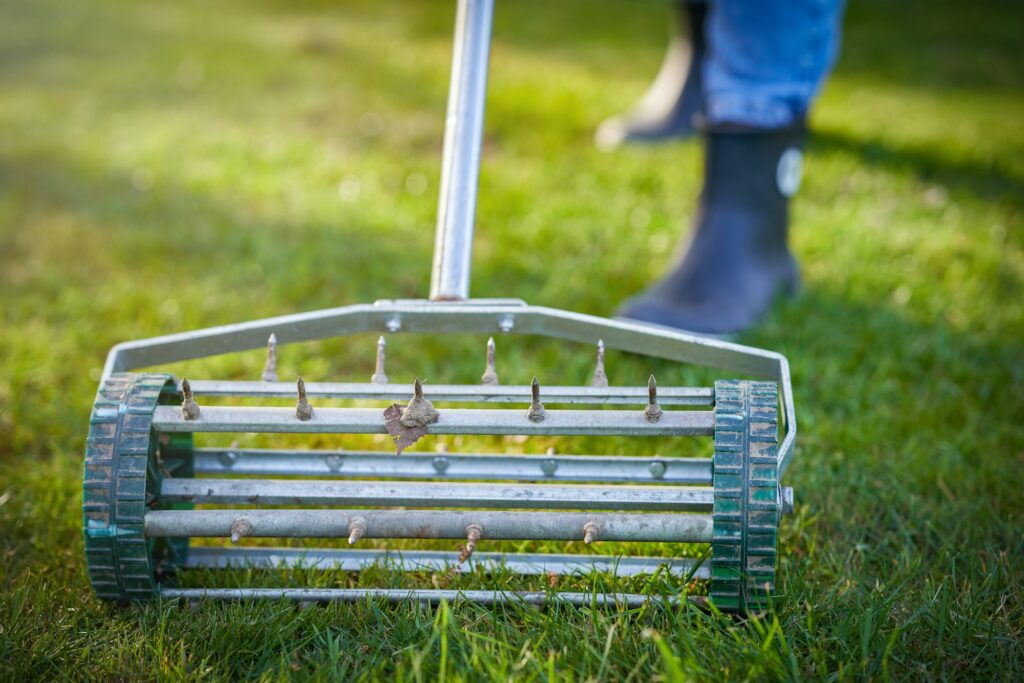
Core aeration pulls out plugs of soil (about 2–3 inches long). Spike aeration pokes holes. Liquid aeration sprays a solution that loosens soil particles chemically.
Does Your Lawn Need Aeration? The 5-Minute Test
Here’s a simple test that takes less time than brewing coffee:
- Take a standard screwdriver or a 6-inch nail
- Push it into the soil in several spots around your yard
- If it slides in easily to 3+ inches, your soil is fine
- If you have to push hard or it won’t go past 1–2 inches, your soil is compacted
Other signs aeration is needed:
- Water pools after rain — sitting in low spots for hours
- Hard, dry soil — cracks form in summer heat
- Thin, patchy grass — especially in heavy traffic areas
- Excessive thatch — more than 1/2 inch of dead organic matter between grass and soil
- Lawn gets heavy use — kids, pets, foot traffic, vehicles
- Clay soil — naturally compact-prone
If you checked 2+ of these, your lawn will benefit from aeration.
Aeration Methods Overview
| Method | How it works | Best for | DIY difficulty | Cost |
|---|---|---|---|---|
| Core aeration | Removes soil plugs (cores) | Compacted soil, clay, heavy thatch | Moderate | $0–$75 (DIY) or $75–$200 (rental) |
| Spike aeration | Pokes holes with spikes | Light compaction, small lawns | Easy | $20–$50 (tool) |
| Manual/core hand tool | Push-pull coring tool | Tiny lawns (under 1,000 sq ft) | Easy | $30–$60 (tool) |
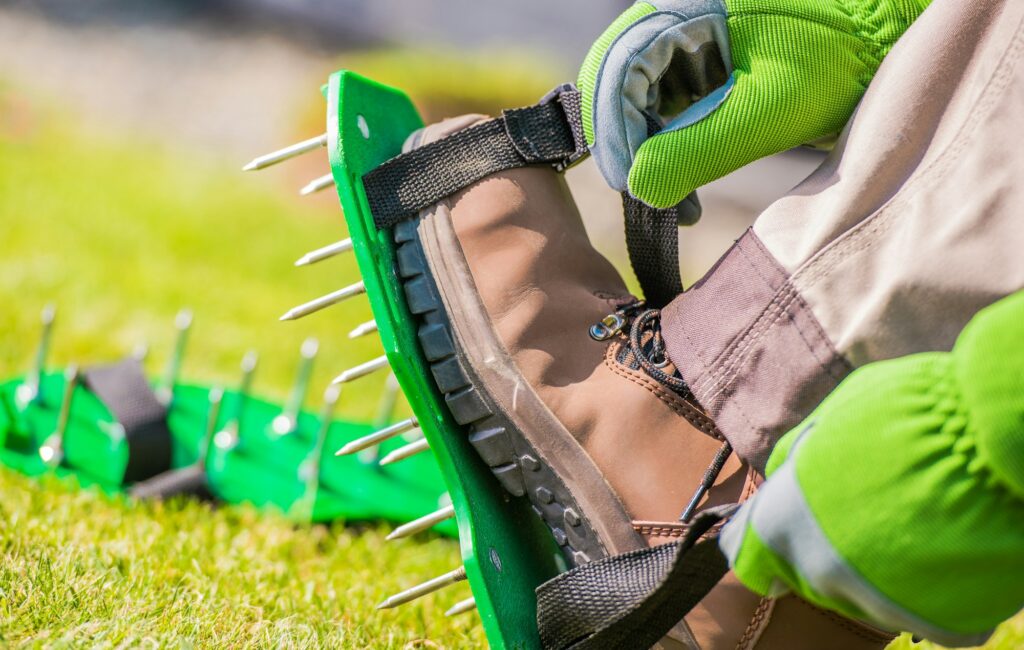
| Aeration shoes | Spikes on soles, walk around | Very light maintenance | Easy | $15–$30 |
| Liquid aeration | Spray-on soil conditioner | Mild compaction, prevention | Easy | $15–$40 per treatment |
Core aeration is the gold standard. Every lawn expert I know uses core aeration. The other methods have their place, but core aeration produces the most dramatic and lasting results.
How to Aerate with a Core Aerator (Best Method)
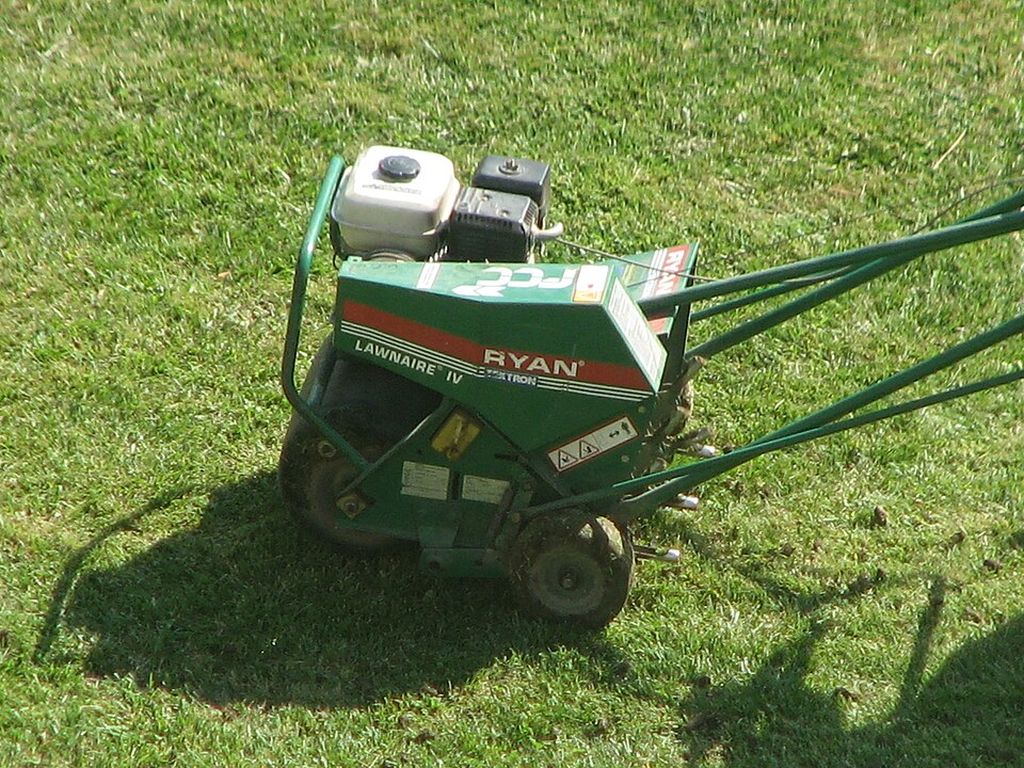
Core aeration pulls 2–3 inch plugs of soil out of the ground. This is what you want. Those plugs are proof the machine is working.
What You’ll Need
- Core aerator (rent from Home Depot, Lowe’s, or a local equipment rental, typically $60–$100 for 4 hours)
- Garden hose or sprinkler
- Lawn flags or marking paint (if you have sprinkler heads or utility lines)
- Rake
- Optional: compost or topsoil for topdressing afterward
Step 1: Prepare the Lawn
Water the lawn 1–2 days before aeration. The soil should be moist but not muddy. Moist soil allows the tines to penetrate to full depth. Dry soil = shallow, ineffective aeration.
Mow the grass to about 2 inches (slightly shorter than usual) to give the aerator easier access.
Mark sprinkler heads and utilities. Walk the lawn and flag any sprinkler heads, valve boxes, or utility covers. The aerator tines can damage sprinkler heads and shallow irrigation lines.
Step 2: Choose the Right Aerator
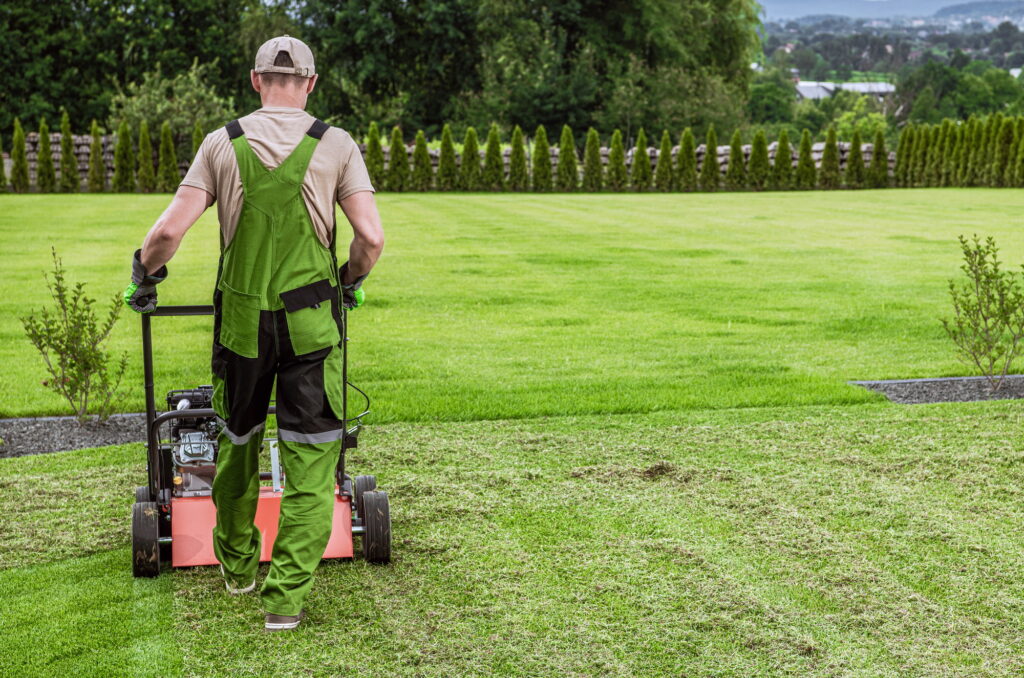
For most home lawns (2,000–10,000 sq ft), a walk-behind core aerator is the right choice. It works like a self-propelled mower and pulls plugs as you walk.
For lawns over 10,000 sq ft, consider a tow-behind aerator for a garden tractor or ATV.
For lawns under 2,000 sq ft, a manual core aerator (step-on or pull-type) will get the job done with some elbow grease.
Step 3: Aerate in Passes
Make overlapping passes across the lawn, similar to mowing. The goal is to create holes spaced about 2–4 inches apart. Most walk-behind aerators cover about 18 inches per pass.
For best results: Make two passes in perpendicular directions. This gives you good coverage without overdoing it. You should see 20–40 plugs per square foot when done.
The plugs should be 2–3 inches long. If they’re shorter, the soil is too dry or the tines are dull.
Step 4: Leave the Plugs (or Rake Them)
The soil plugs left on the surface will break down naturally with rain and mowing within 1–2 weeks. They’re full of beneficial microorganisms, and as they break down, they return nutrients to the soil.
If you find the plugs unsightly, you can rake them up. But I recommend letting them break down naturally, it’s free fertilizer.
Step 5: Follow Up
Aeration creates channels into the soil. This is the perfect moment to overseed, fertilize, or topdress. See the “What to Do After Aeration” section below.
How to Aerate with a Spike Aerator
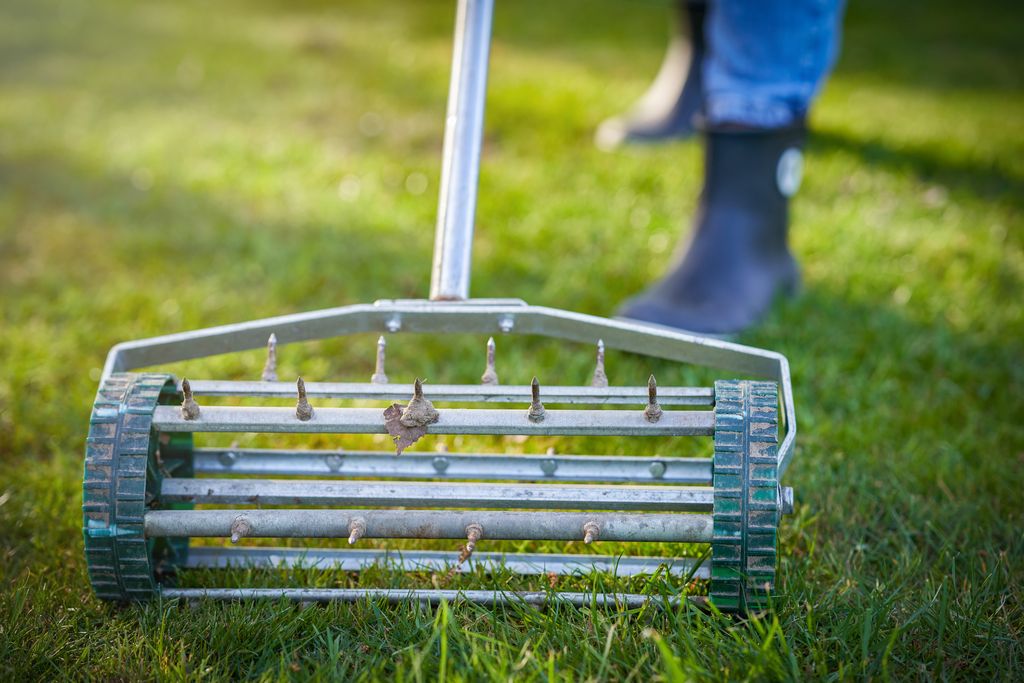
Spike aerators have solid tines that push into the soil without removing a plug. They’re less effective than core aeration because they don’t remove soil: they just create a hole. In clay soils, spike aeration can actually increase compaction around the edges of each hole.
When spike aeration makes sense:
- Small lawn with loose, sandy soil
- Light maintenance between core aeration sessions
- Very light soil compaction
How to do it:
- Prepare the lawn the same way as for core aeration (water, mow, mark)
- Walk the spike aerator across the lawn in overlapping rows
- Make a second perpendicular pass for better coverage
- Follow up with overseeding or watering
How to Aerate by Hand (Small Lawns)
For lawns under 1,000 sq ft, you can aerate manually with a hand core aerator (a tool that looks like a pitchfork with hollow tines and foot rests).
- Water the lawn the day before
- Step on the tool, push it into the soil, and pull it out with a plug
- Space holes 3–4 inches apart
- Repeat across the entire lawn
Time estimate: About 30 minutes per 500 sq ft. It’s good exercise but slow.
For tiny lawns or spot-aerating bare patches, manual aeration works fine. For larger areas, rent a machine.
What to Do After Aeration
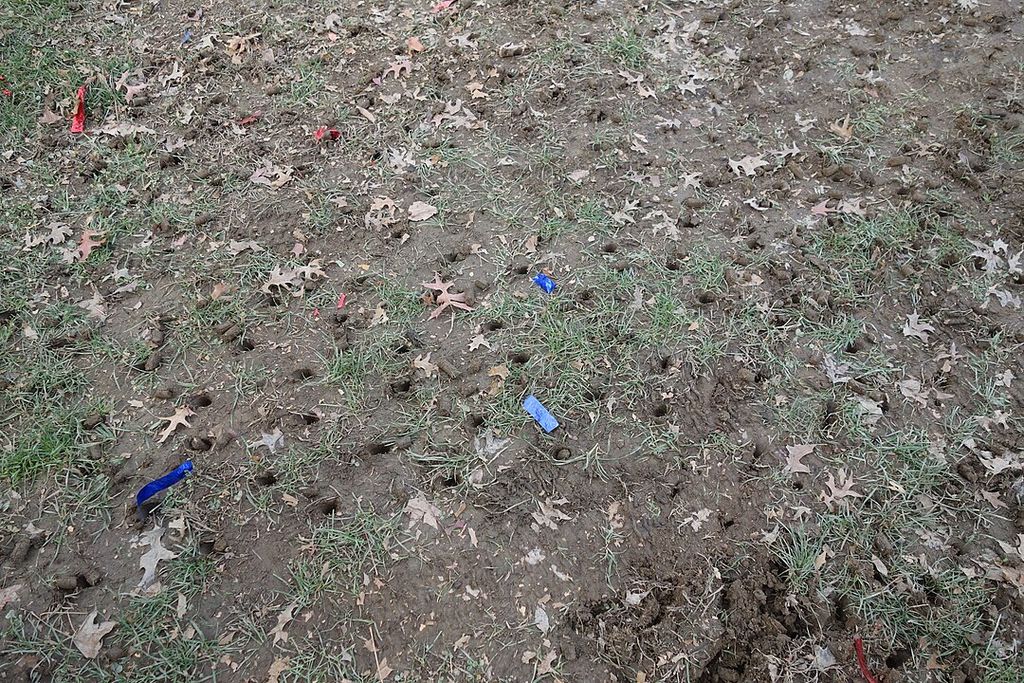
Aeration creates the ideal conditions for seed germination and nutrient absorption. Don’t waste this opportunity.
Overseed Immediately
Aeration holes are perfect seed beds. The seed falls into the holes, gets good soil contact, and germinates faster than surface-sown seed.
- Apply grass seed at the recommended rate for your grass type
- Use the same type as your existing lawn
- Water lightly daily for 2–3 weeks
Apply Fertilizer
Fertilizer applied right after aeration reaches the root zone directly. Use a balanced starter fertilizer (10-20-10 or similar) at the recommended rate.
Topdress with Compost
This is the secret to an elite-level lawn. Spread 1/4 to 1/2 inch of fine compost over the aerated lawn. Rake it into the holes. The compost fills the aeration channels with organic matter, which feeds the soil food web and retains moisture.
Water
Keep the soil moist for 2–3 weeks after aeration. The open channels will dry out faster than normal. Water lightly every other day if there’s no rain.
Common Aeration Mistakes
| Mistake | Why it’s a problem |
|---|---|
| Aerating dry soil | Tines can’t penetrate fully — you get shallow holes that close up quickly |
| Aerating at the wrong time | Aerating cool-season grass in summer stresses the lawn; aerating warm-season in winter is wasted effort |
| Aerating without overseeding | Aeration’s biggest benefit is preparing seed beds — skipping overseeding leaves opportunity on the table |
| Using spike aerators on clay soil | Spike aeration compacts clay further around each hole |
| Aerating wet, muddy soil | Tines get clogged, plugs don’t form, and you damage soil structure |
| Not marking sprinklers | Aerator tines can snap sprinkler heads or puncture irrigation lines |
| One pass only | One pass covers about 50–60% of the surface. Two perpendicular passes are ideal. |
| Aerating a lawn with active weeds | Aeration spreads weed seeds and can accelerate weed growth — control weeds first |
Wrapping Up
Aeration is the most impactful thing you can do for a compacted lawn. Core aeration with a walk-behind machine, followed by overseeding and a thin layer of compost, will produce results you can see within weeks.
The screwdriver test takes 30 seconds: if your soil is hard, it’s time to aerate.
F.A.Q
How deep should aeration holes be?
2–3 inches. This is deep enough to reach most grass root zones. If your aerator is pulling plugs shorter than 2 inches, the soil is too dry.
Should I water before or after aeration?
Water 1–2 days before aeration, moist soil allows full tine penetration. Water immediately after aeration if you’re overseeding (keeps seeds moist).
Do I need to pick up the soil plugs?
No. The plugs break down naturally in 1–2 weeks. They return nutrients to the soil. If they bother you visually, you can rake and compost them.
Can I aerate a wet lawn?
No. Aerating wet, muddy soil causes the tines to clog and damages soil structure. The soil should be moist but not saturated.
How often should I aerate?
Once per year for most lawns. Every 2–3 years is enough for low-traffic lawns. High-traffic lawns or clay soil may need twice per year (spring + fall).
Can I aerate in summer?
For cool-season grass, summer aeration stresses the lawn — do it in spring or fall instead. For warm-season grass, summer aeration is fine if the lawn is healthy and watered.
Does aeration hurt the lawn?
Not if done correctly. Aeration causes some surface disruption, but the grass recovers within 1–2 weeks and grows stronger because of it. The short-term “mess” is worth the long-term benefit.
Can I aerate and dethatch at the same time?
Not recommended. Dethatching is aggressive and damages the lawn temporarily. Do one or the other — aerate in fall, dethatch in spring, or vice versa. Give the lawn 4–6 weeks to recover between major operations.