There’s nothing more frustrating than rolling your mower out of the shed on a Saturday morning, pulling the starter cord, and hearing… nothing. Your lawn mower won’t start, and suddenly your perfectly manicured yard plans are on hold.
Before you panic and search for lawn mower repair near me, take a breath. Most starting problems are surprisingly easy to fix right in your own garage. In fact, many common issues can be resolved with basic tools, a little patience, and the right replacement parts.
This guide walks you through 10 common reasons your lawn mower won’t start and shows you exactly how to fix each one. By the time you finish reading, you’ll know how to diagnose fuel problems, test your lawn mower battery, check spark plugs, sharpen blades, and source the right lawn mower parts—whether you need Craftsman lawn mower parts, Toro lawn mower parts, or components for other brands.
This post contains affiliate links. As an Amazon Associate, I earn from qualifying purchases at no additional cost to you.
Before You Begin: Safety First
Before doing any troubleshooting or repair work, always:
- Disconnect the spark plug wire to prevent accidental starting
- Wear safety glasses and gloves
- Work in a well-ventilated area
- Refer to your operator’s manual for model-specific instructions
10 Reasons Your Lawn Mower Won’t Start (And How to Fix Them)
1. Empty or Old Fuel
This is the most common reason a lawn mower won’t start—and the easiest to fix. Most lawn mower fuels begin to break down and lose their effectiveness after just 30 days. Old fuel appears cloudy, dark, or has a yellowish tint with a sour or stale odor.
How to fix: Drain the old fuel from the tank and replace it with fresh gasoline with an octane rating of at least 87 and less than 10% ethanol content. For future prevention, add a fuel stabilizer to extend the life of your fuel.
2. Clogged Fuel Filter or Fuel Line
If your fuel is fresh but your lawn mower won’t start, the fuel might not be reaching the engine. The fuel filter is typically located between the fuel tank and the carburetor.
How to fix: Check for debris or dirt in the fuel filter. A working filter allows light to pass through easily; if light can’t pass, the filter is clogged and needs replacement. Also inspect fuel lines for cracks, kinks, or blockages. Over time, some ingredients in fuel evaporate, leaving behind a thicker, stickier substance that clogs filters.
3. Clogged Carburetor
A clogged carburetor is most commonly caused by leaving fuel in the engine for a long period. The sticky residue from old fuel can clog the carburetor and prevent the engine from starting.
How to fix: Try cleaning the carburetor with carburetor cleaner. If cleaning isn’t effective, you may need to rebuild or replace the entire carburetor. This is more involved, so if you’re unsure, it may be time to search for lawn mower repair near me.
4. Dirty or Faulty Spark Plug
Disconnected, dirty, or fouled spark plugs are common causes for engines that won’t start. Spark plugs typically need to be replaced every season or after 25 hours of use.
How to fix:
- Disconnect the spark plug lead
- Clean the area around the plug to avoid getting debris in the combustion chamber
- Remove the spark plug using a spark plug socket
- Clean light deposits with a wire brush and spray-on plug cleaner
- Inspect for cracked porcelain or burned electrodes—if damaged, replace the plug
- When reinstalling, don’t over-tighten (15 ft. lbs. maximum)
Note: Never clean a spark plug with a shot blaster or abrasives.
5. Dead Lawn Mower Battery
If your mower has an electric start and you hear a click or groan when trying to start, your lawn mower battery may be dead.
How to test your lawn mower battery:
- Connect the battery to a charger. If it isn’t fully charged within 8 hours, your lawn mower battery is dead and needs replacement
- Use a multimeter to test the charger for proper voltage output
- Check that the outlet hasn’t tripped a breaker
If the lawn mower battery holds a charge but still drains quickly, you may have an alternator issue. For the easiest alternator test, turn on the mower’s headlights, then turn off the engine—if the lights dim, the alternator works; if not, it doesn’t.
6. Dirty Air Filter
If the engine cranks but your lawn mower won’t start, a clogged air filter could be the culprit. A dirty air filter restricts airflow to the engine, leading to an improper fuel-air mixture that won’t combust.
How to fix: Clean or replace the air filter. This is one of the simplest and cheapest maintenance tasks you can perform.
7. Loose or Disconnected Spark Plug Wire
Sometimes the simplest explanation is the right one. A loose, dirty, or disconnected spark plug wire will prevent your engine from firing.
How to fix: Check the spark plug connection, clean off any debris, reconnect it firmly, and tighten if necessary.
8. Safety Device Engagement
Many modern mowers have safety features that prevent starting if certain conditions aren’t met—like the blade engagement lever being engaged or the operator not being in the seat (for riding mowers).
How to fix: Check that all safety switches are properly engaged:
- Ensure the blade control bar is fully pressed against the handle
- For riding mowers, make sure you’re seated properly
- Check that the parking brake is engaged (if applicable)
9. Clogged or Overloaded Mower Deck
If the mower blade is dragging in grass or clogged with clippings, it can prevent the engine from starting or cause it to stall immediately.
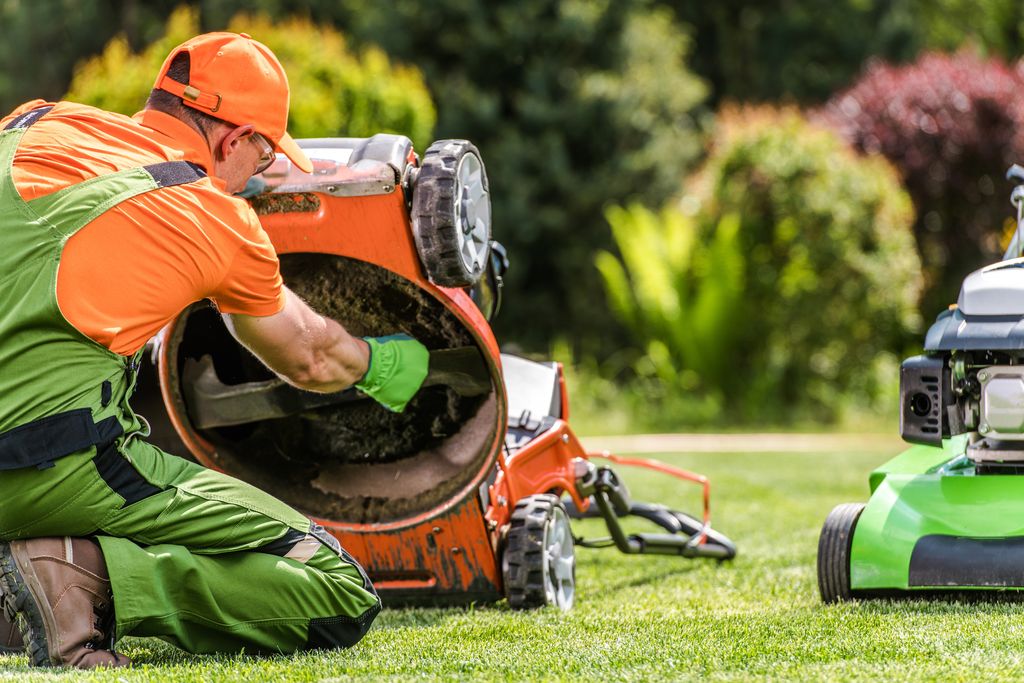
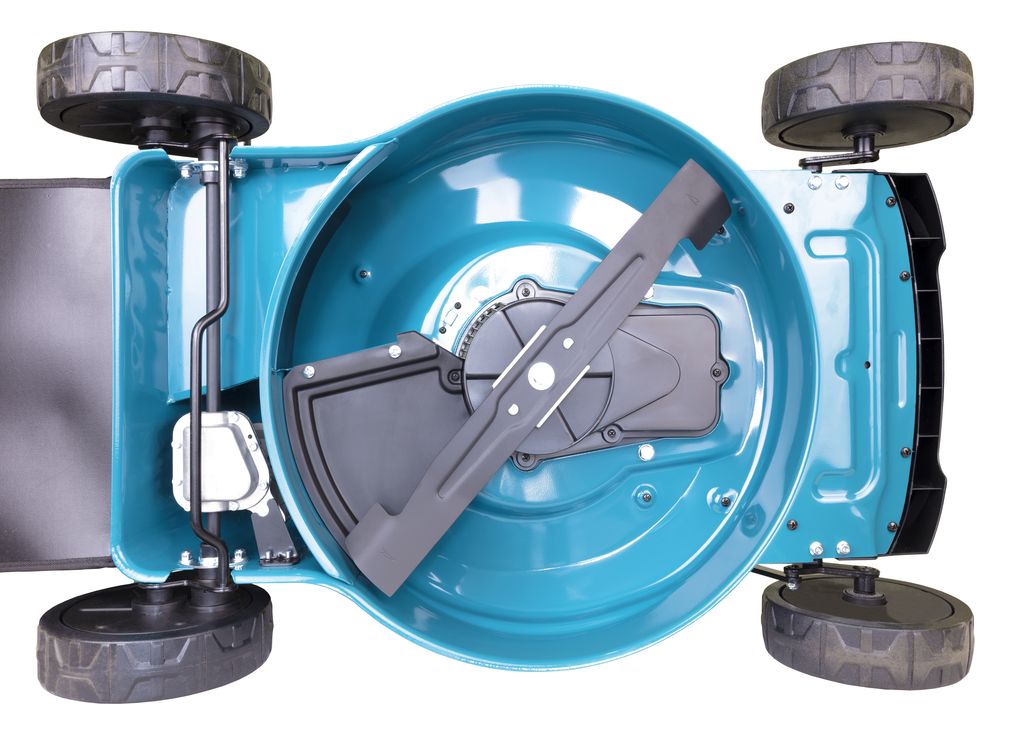
How to fix: Move the mower to a hard surface. With the mower turned off and the spark plug wire disconnected, clear the underside of the mower deck of excessive grass clippings and debris.
10. Dull or Damaged Blade (Not a Starting Issue, But Essential)
While a dull blade won’t prevent your mower from starting, it will ruin your lawn. If you’ve fixed the starting issue but your grass looks ragged with brown tips, it’s time to use a lawn mower blade sharpener. A dull blade creates ragged edges on grass tips that can turn brown or invite disease.
How to sharpen with a lawn mower blade sharpener:
- Disable the mower by removing the spark plug or battery
- Tilt the mower onto its side with the air filter and carburetor facing up
- Remove the blade—most are attached by one or two bolts
- Sharpen the blade using a lawn mower blade sharpener (a drill attachment, metal file, or bench grinder). A drill-based sharpener is quick and effective—clamp the blade between the guide and stone, activate the drill, and run a few passes back and forth
- Balance the blade—hang it on a nail; if one side drops, remove more metal from that side until it sits parallel
- Reinstall the blade securely
How often: Sharpen blades twice per season or after 25 hours of use—and always after hitting rocks.
When to Search “Lawn Mower Repair Near Me”
Not every problem is a DIY fix. Here’s when it’s time to put down the tools and search for lawn mower repair near me:
Call a Professional When:
- You’ve tried all the basics and your lawn mower won’t start—if you’ve checked the fuel, spark plug, air filter, and lawn mower battery and nothing works, it’s time for a pro
- Major engine problems—internal damage, compression issues, and fuel pump failures require diagnostic tools and expertise
- Complex repairs—hydrostatic transmissions and electrical shorts are best left to professionals
- Excessive smoke or oil leaks—if your mower is churning out smoke or refusing to start, call for service
- The mower is smoking—while some smoke is normal (often just oil burning off), if you see lighter-colored smoke and have trouble keeping the mower running, it’s time for a serious look by a professional
- Crankshaft damage—repairing a crankshaft can cost $500 to $900, so depending on your mower’s age, replacement might be a better option
How to Find a Good Repair Shop
The fastest way to find a solid repair place: call your local Home Depot or Lowe’s lawn and garden department and ask where they send their warranty repairs. You can also:
- Search lawn mower repair near me online and read reviews
- Check with local small engine repair shops
- Visit brand-specific service dealers (Briggs & Stratton, John Deere, etc.)
Maintenance Tips to Prevent Starting Problems
Prevention is always better than repair. Follow these tips to keep your mower running smoothly:
- Use fresh fuel and add fuel stabilizer at the end of each season
- Change the oil every 25 hours of use or each season
- Check and replace spark plugs every season or 25 hours
- Clean or replace the air filter regularly
- Sharpen blades twice per season using a lawn mower blade sharpener
- Test your lawn mower battery before the season starts
- Clean the underside of the deck after each use to prevent buildup
Final Thoughts
A lawn mower won’t start is rarely a death sentence for your machine. In most cases, the fix is simple, inexpensive, and well within the abilities of a DIY homeowner. Start with the basics—fuel, spark, air—and work your way through the troubleshooting steps above.
When you need parts, always choose OEM components. Using genuine OEM parts ensures proper fit and long-term reliability.
And when you’ve reached the limits of your DIY skills, don’t hesitate to search lawn mower repair near me. A professional can diagnose complex issues quickly and get you back to mowing—with a perfectly manicured yard to show for it.