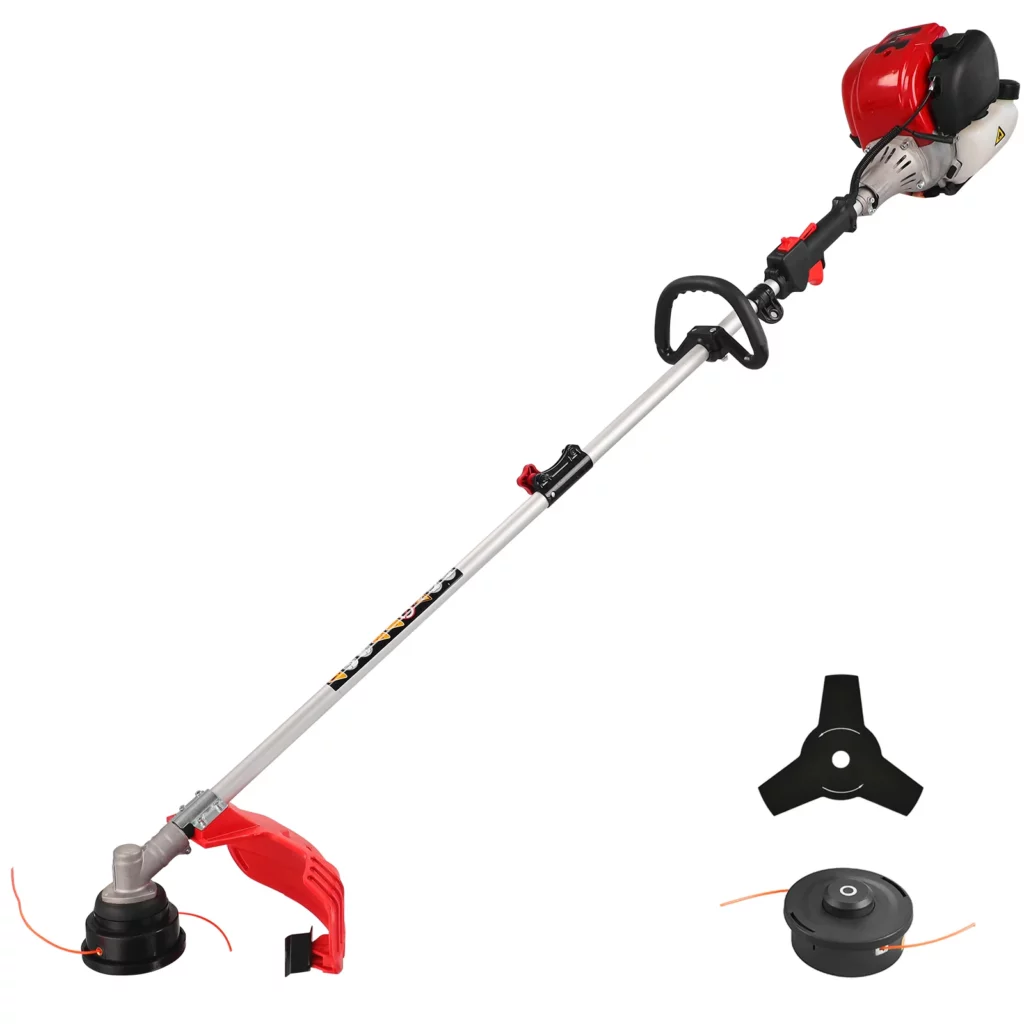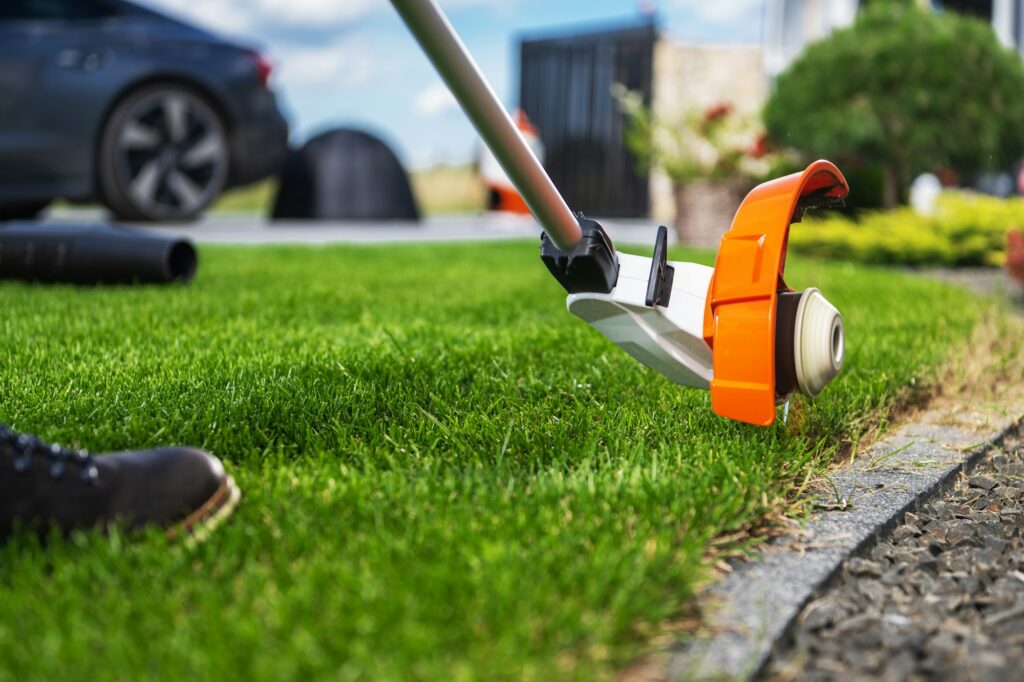
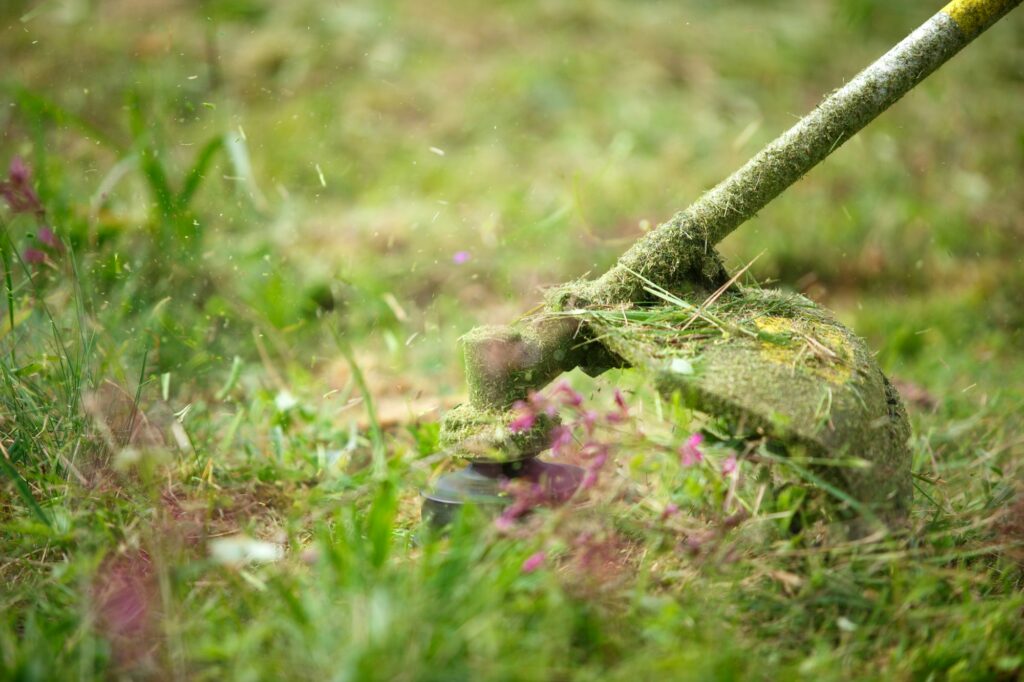
The cordless revolution has officially arrived for yard work. Homeowners are ditching gas-powered trimmers for the convenience, quiet operation, and zero emissions of battery-powered weed eaters. And why wouldn’t they? Modern lithium-ion technology and brushless motors now deliver power that rivals traditional gas engines, without the fumes, pull-starts, or oil changes .
But with so many options on the market, finding the best battery powered weed eater for your yard can feel overwhelming. This guide cuts through the noise, covering five top-rated brands, explaining what specs actually matter, and helping you decide which model fits your lawn and budget.
This post contains affiliate links. As an Amazon Associate, I earn from qualifying purchases at no additional cost to you.
What to Look For in a Battery Powered Weed Eater
Before jumping into specific models, understand the key specs that determine real-world performance.
Voltage (Power): Voltage is the closest thing to a horsepower rating. Higher voltage means more torque and better performance in thick weeds . Entry-level 20V–40V trimmers handle light grass and small yards. Mid-range 60V models manage most residential trimming. The best rated battery powered weed eater for heavy work typically runs on 80V, delivering gas-equivalent power .
Amp-Hours (Runtime): Amp-hours (Ah) measure battery capacity. A 2.0Ah battery might run 45 minutes under light load, but heavy weeds can drop that to 25 minutes . For a standard suburban quarter-acre yard, a 4.0Ah battery or a 2.0Ah with a spare on the charger is the sweet spot .
Cutting Width: Wider cutting paths mean faster work. 15–16 inches is the sweet spot for most homeowners, balancing speed with maneuverability around landscaping . Narrower 12–14 inch models work well for tight yards, while 17+ inches suit larger properties and open spaces .
Line Diameter: This often-overlooked spec matters. Thicker line cuts tougher material without breaking:
- 0.065″ : Light grass and edging only
- 0.080″ : Standard residential — handles weekly maintenance plus weeds
- 0.095″ and up: Heavy duty — thick weeds and brush
Weight: You’ll hold the trimmer at arm’s length, sometimes for 30+ minutes. Most quality trimmers weigh 8–12 pounds. Front-mounted motors shift weight forward, feeling lighter in use .
Battery Platform: Consider the broader tool ecosystem. If you already own batteries from a brand like DEWALT, Ryobi, or Greenworks, buying a compatible trimmer saves money .
Top 5 Best Battery Powered Weed Eaters
1. Greenworks 80V 16″ Brushless String Trimmer
Best Overall for Homeowners
The Greenworks 80V trimmer hits all the right specs for most residential yards. Its 80V brushless motor delivers 27cc gas-equivalent power, and the 16-inch cutting width with 0.080″ dual-line handles weekly maintenance and weeds without bogging .
The front-mounted motor balances the trimmer well, making its 9.8 pounds feel lighter in use. Runtime hits up to 45 minutes on the included 2.0Ah battery, and the rapid charger fully recharges in 30 minutes . For larger yards, the 80V battery platform scales up to 8.0Ah packs for up to 180 minutes of runtime .
Why it stands out: The 4-year warranty on both tool and battery is among the strongest in the category. Plus, the 80V battery works across 75+ Greenworks tools — mowers, blowers, chainsaws — so you’re buying into a complete ecosystem .
Best for: Standard suburban yards (quarter-acre to half-acre) needing gas-equivalent power without the gas hassle.
Line tip: Use 0.080″ round or twisted line. Greenworks pre-wound spools are convenient, but bulk line works fine.
2. DEWALT 60V MAX Brushless String Trimmer
Best Heavy-Duty Option
When you need serious power for overgrown areas, the DEWALT 60V delivers. Its brushless motor tears through thick weeds and even tough blackberry canes . The 17-inch cutting swath accepts either 0.080″ or 0.095″ line, giving you flexibility for different jobs .
Runtime hits about 40 minutes on high power and up to 60 minutes on low with the 3Ah FlexVolt battery . Low power alone offers more cutting force than many competitors’ high settings .
Why it stands out: Attachment capability lets you swap the trimmer head for edgers, hedge trimmers, pole saws, and more — turning one power head into multiple tools .
Potential drawbacks: At nearly 13 pounds, it’s one of the heaviest trimmers tested. No shoulder strap hook is included . It’s also relatively noisy compared to other battery models.
Best for: Large properties, overgrown areas, and users who already own DEWALT 60V FlexVolt batteries.
Line tip: For standard yard work, stick with 0.080″ line for longer runtime. Switch to 0.095″ only for heavy brush.
3. EGO Power+ 15″ Powerload String Trimmer
Best Ease of Use
EGO’s 56V Powerload trimmer earned high marks from Consumer Reports and Bob Vila for its user-friendly design . The standout feature is the Powerload head — just insert line and press a button to automatically spool it, eliminating frustrating manual winding .
At 10.3 pounds with a 2.5Ah battery, it’s well-balanced and easy to handle. Runtime reaches up to 45 minutes, enough for most suburban yards .
Why it stands out: The tool-free line loading system is genuinely game-changing. The 56V platform offers excellent value and performance across EGO’s expanding outdoor tool lineup.
Best for: Homeowners who prioritize ease of use and convenience.
Line tip: Use EGO’s pre-cut 0.095″ line lengths for the fastest reloading. Bulk line works but requires cutting to the correct length.
4. Ryobi 40V 15″ String Trimmer
Best Value for Existing Ryobi Users
The Ryobi 40V trimmer offers solid performance at an accessible price point. Consumer Reports rated it among the top battery trimmer brands, and Bob Vila testing found 45-minute runtime with the 4.0Ah battery . The 15-inch cutting width and 0.080″ line handle standard residential trimming well.
Why it stands out: Ryobi’s 40V platform includes dozens of tools, making it easy to expand your cordless outdoor collection without buying new batteries. The attachment-capable version accepts edgers, cultivators, and more.
Best for: Homeowners already invested in Ryobi 40V tools or looking for a budget-friendly entry to battery trimming.
Line tip: Ryobi’s pre-wound spools are widely available and simple to swap. For cost savings, bulk 0.080″ line works with the standard bump-feed head.
5. Makita 40V XGT 18″ Brushless String Trimmer
Best Professional-Grade
Makita’s XRU07 (40V XGT) and XRU15 (18V LXT dual-battery) models represent the premium tier. Consumer Reports ranked the XRU15PT as the best battery operated string trimmer you can buy, noting it “hits all our performance tests out of the park” .
The XRU07 delivers 35cc gas-equivalent power with an 18-inch cutting swath capable of 0.105″ line — serious brush-cutting specs . Makita’s reverse rotation mode clears stuck debris, and the cruise control lets you dial in power for runtime efficiency .
Why it stands out: Pro-grade build quality, exceptional power, and Makita’s legendary reliability. The LXT dual-battery setup (two 18V batteries) leverages batteries many pros already own.
Potential drawbacks: Premium pricing — kits typically run $400–500+. Weight is on the heavy side at 14+ pounds .
Best for: Professional landscapers and serious homeowners wanting pro-grade performance.
Line tip: Use 0.095″ or 0.105″ line for maximum cutting power. Makita’s rapid-load heads make restringing fast.
Battery Platform Compatibility Table
| Brand | Voltage | Battery Works With | Line Diameter | Cutting Width | Weight | Runtime (Typical) |
|---|---|---|---|---|---|---|
| Greenworks | 80V | 75+ tools (mowers, blowers, chainsaws) | 0.080″ | 16″ | 9.8 lbs | 45 min (2Ah) |
| DEWALT | 60V FlexVolt | All DEWALT 60V & 20V tools | 0.080″–0.095″ | 15–17″ | 12.95 lbs | 40–60 min |
| EGO | 56V | Full EGO outdoor line | 0.095″ | 15″ | 10.3 lbs | 45 min |
| Ryobi | 40V | 40V outdoor tools | 0.080″ | 15″ | 11.8 lbs | 45 min |
| Makita | 40V or 18V LXT (dual) | Respective Makita platforms | 0.095″–0.105″ | 18″ | 14+ lbs | 30 min |
Real-World Battery Performance
Battery runtime specs are usually stated for light-load use. Real-world trimming in heavy weeds can cut runtime by 40–50% :
| Cutting Condition | Runtime vs. Spec |
|---|---|
| Light grass, edging only | 100–110% of spec |
| Standard residential trimming | 75–85% of spec |
| Heavy weeds, thick grass | 50–65% of spec |
| Continuous full-throttle in dense brush | 35–50% of spec |
Practical implication: If your yard has thick weeds, size your battery around worst-case conditions. A trimmer rated for 45 minutes on a 2.0Ah battery might deliver 25 minutes of real work .
Which Yard Size Do You Have?
- Small yard (under 5,000 sq ft): A 2.0Ah battery is enough
- Standard suburban (quarter-acre): A 4.0Ah battery or 2.0Ah + spare
- Large yard (half-acre+): An 8.0Ah battery, or 4.0Ah + spare
The Bottom Line
The best battery powered weed eater for most homeowners is the Greenworks 80V 16″ Brushless String Trimmer. It delivers gas-equivalent power, excellent balance, and compatibility with a full outdoor tool ecosystem, all backed by a 4-year warranty.
If you already own DEWALT 60V or Ryobi 40V tools, buying the compatible trimmer makes financial sense and keeps your battery collection unified . For pro-grade performance, Makita’s 40V XGT models are the gold standard .
Whichever model you choose, match the battery and line diameter to your yard’s size and weed conditions. Size your battery around your worst-case trimming, not the best-case spec, and store lithium-ion batteries indoors at room temperature for maximum lifespan.
F.A.Q
How many years will a battery-powered weed eater last?
The tool itself typically lasts 7–10 years of regular residential use — brushless motors especially. The battery is the first replacement, typically at 5–7 years . Since Greenworks 80V batteries fit 75+ tools, replacing one battery keeps your entire tool collection running.
Can battery-powered weed eaters handle the same jobs as gas?
For residential use, yes — the 80V tier specifically. For 8-hour commercial daily use or off-grid applications with no charging access, gas still has a runtime advantage .
Should I buy the biggest battery I can?
Not always. Larger batteries are heavier, making the trimmer harder to hold at arm’s length. For most homeowners, a 2.0Ah or 4.0Ah battery hits the balance of runtime and weight. Reserve the 8.0Ah packs for tools that benefit most (mowers, blowers), not the trimmer .
How do I know when the battery needs replacing?
Track your runtime over time. If a battery that used to give you 45 minutes now delivers 20 minutes at the same cutting intensity, capacity has dropped substantially. Most batteries hit this point at 5–7 years of regular use .
Can I use different voltages within the same brand?
No. Voltages are not cross-compatible across platforms (e.g., Greenworks 24V/40V/60V/80V batteries don’t interchange). Pick your voltage tier deliberately and commit to it .