Shopping for lawn mowers in 2026 can feel overwhelming. Walk into any home improvement store or browse online, and you will face a dizzying array of options: traditional gas-powered push mowers, battery-powered electric models, riding mowers for large properties, and even robotic mowers that do all the work for you.
The global lawn mower market is projected to grow from USD 28.36 billion in 2025 to USD 30.29 billion in 2026, with traditional gasoline-powered models now being challenged by electric and robotic solutions that promise quieter operation, reduced emissions, and smarter user experiences.
This comprehensive guide will help you cut through the noise and choose the right modern mowing equipment based on your yard size, budget, and eco-friendly preferences. Whether you are searching for lawn mowers for sale locally or comparing the latest robotic mower alternatives, this article covers everything you need to know to make a confident purchase in 2026.
This post contains affiliate links. As an Amazon Associate, I earn from qualifying purchases at no additional cost to you.
The Three Contenders: A Quick Overview
Gas-Powered Lawn Mowers
Gas-powered lawn mowers have been the standard for decades. They are divided into push and riding types, offering strong power with no dependence on power supply, making them suitable for large lawns over 0.2 hectares with dense weeds.

Pros:
- Raw power – Gas engines deliver superior torque for tackling thick, overgrown grass
- Unlimited runtime – As long as you have fuel, you can keep mowing
- Lower upfront cost – Most gas models fall under $500, even for big brands like Toro and Craftsman
- Familiarity – Most homeowners already know how to operate and maintain them
Cons:
- High maintenance – Regular oil changes, spark plug replacements, air filter changes, and winterization
- Noise pollution – Gas mowers interfere with daily life and contribute to neighborhood noise
- Emissions – They release harmful exhaust fumes
- Fuel costs – Annual fuel costs can reach $260–$520
Electric Lawn Mowers (Battery-Powered)
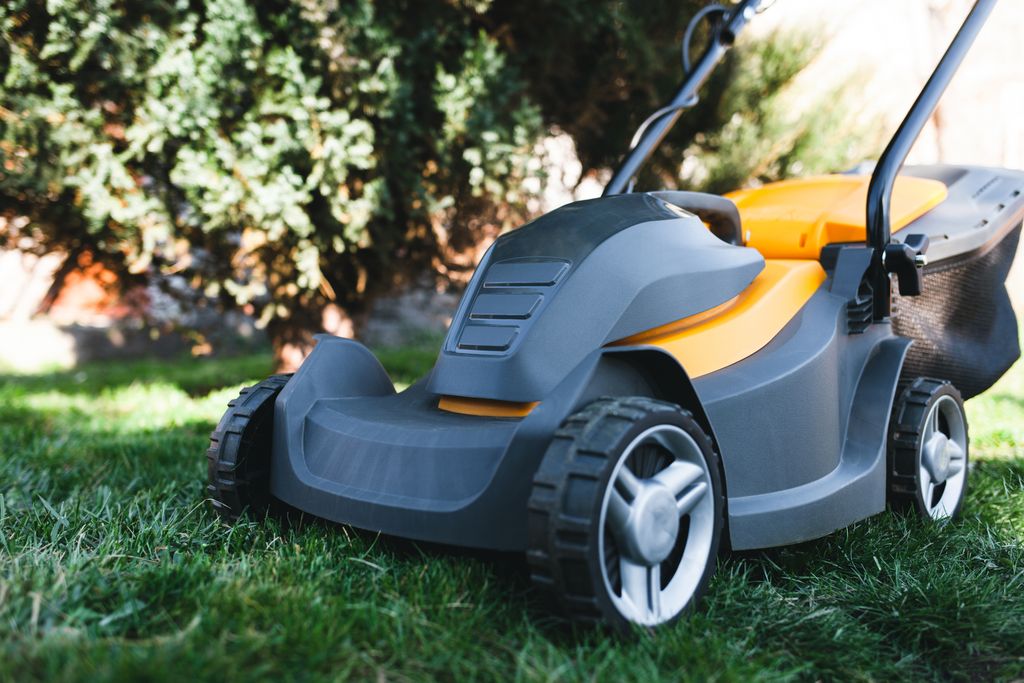
Battery powered lawn mowers have made enormous strides in recent years. Battery energy density has improved significantly, enabling cordless electric models to rival gasoline mowers in both power and runtime. The Ego lawn mower line, for example, has become a benchmark for what electric mowers can achieve.

Pros:
- Low maintenance – No oil changes, spark plugs, or air filters to replace
- Quiet operation – Dramatically reduced noise compared to gas models
- Zero emissions – Environmentally friendly
- Instant start – Just plug in the battery and go
- Battery interoperability – Ego batteries can power any of Ego’s line of 56-volt cordless tools for the yard, such as string trimmers and leaf blowers
Cons:
- Limited runtime – Typically 45–75 minutes per charge depending on battery size
- Higher upfront cost – Quality electric models often cost more than comparable gas mowers
- Battery replacement – Batteries degrade over time and can be expensive to replace
- Charging time – You need to plan around charging cycles
Top Pick: The Ego Power+ Select Cut Self-Propelled Mower has been awarded “Best Overall” by multiple reviewers for offering a premium mowing experience at a competitive price. The Ego LM2200 has more motor torque at 11 foot-pounds than most gas push mowers.
Robot Lawn Mowers
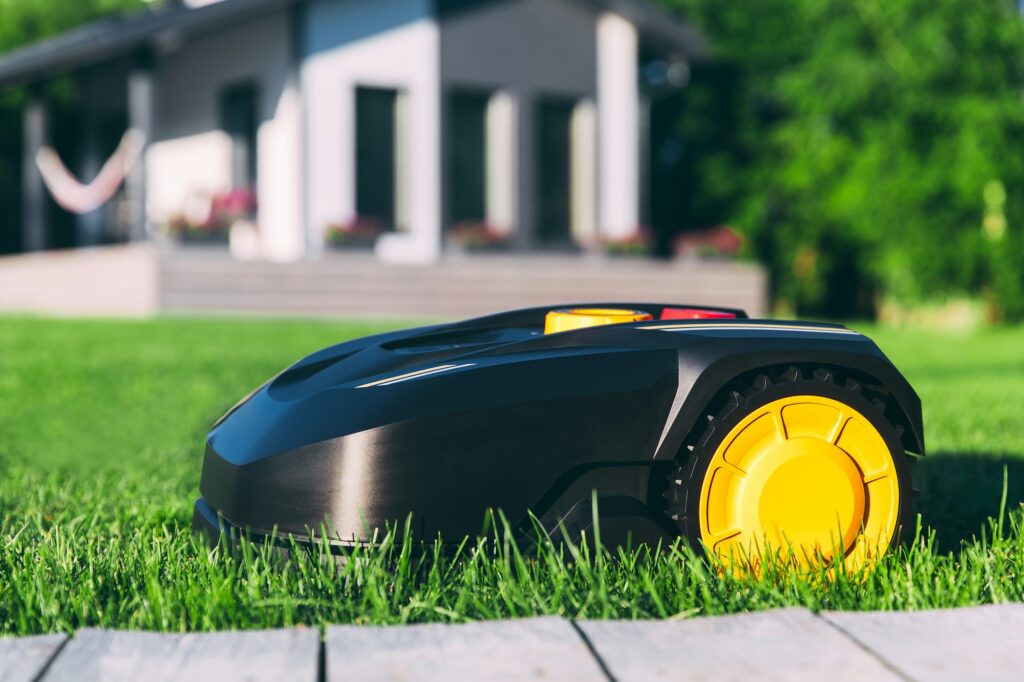
Robot lawn mower technology has advanced rapidly, with models now featuring GPS navigation, rain sensors, anti-theft mechanisms, and 4G connectivity. These automated devices handle mowing with minimal human intervention.
Pros:
- Hands-free operation – Set it and forget it; the mower works automatically
- Minimal maintenance – No oil changes, spark plugs, or air filters. You only need to change the small cutting blades periodically (usually every 1–2 months) and keep the charging station clean
- Quietest option – Robot mowers set a new standard for quiet lawn care
- Healthy lawn – Frequent light cuts promote a healthier, denser lawn
- Low energy cost – Uses $30–$60 per year in electricity
Cons:
- High upfront cost – $2,000–$5,000 for most residential lawns
- Complex setup – May require boundary wire installation or GPS configuration
- Not ideal for complex yards – Obstacles, slopes, and irregular shapes can be challenging
- Slower cutting – Takes longer to cover the same area
Top Picks: The Segway Navimow X390 can cover up to 2.5 acres in a day and features high-end amenities. For smaller lawns, the Eufy E15 Robot Lawn Mower delivers an even cut with a wire-free design.
Riding Lawn Mowers
For larger properties, riding lawn mowers remain the go-to choice. In 2026, both gas and battery-powered riding mowers are available, with battery models proving to be strong contenders..

Pros:
- Speed and efficiency – Cover large areas quickly
- Comfort – Sit-down operation reduces fatigue
- Power – Can handle tough terrain and thick grass
- Versatility – Many models accept attachments for other tasks
Cons:
- Expensive – Significant investment
- Storage space – Requires garage or shed space
- Maintenance – Gas models require regular servicing; battery models need battery care
Top Pick: The John Deere X354 topped Consumer Reports’ 2026 rankings with an overall rating of 84. For battery-powered options, the John Deere Z370R Electric ZTrak Mower earned top honors.
Long-Term Maintenance Costs Comparison
| Cost Category | Gas Mower | Electric (Battery) | Robot Mower |
|---|---|---|---|
| Annual maintenance | ~$150 (oil, filters, plugs, blade sharpening) | ~$60 (battery care, blade service) | ~$20 (blade replacements) |
| Annual fuel/electricity | $260–$520 | ~$30–$60 per year | $30–$60 per year |
| 5-year total cost | ~$2,050+ | ~$450+ | ~$250+ |
| Blade replacement | Annually or as needed | Periodically | Every 6–8 weeks ($15–$30 per set) |
Gas engines add cost through displacement and parts, while battery packs and smart features raise upfront price and potential replacement costs. Over five years, the maintenance savings from electric and robot mowers can be substantial.
Yard Size Calculator: Finding Your Perfect Match
Choosing the right mower starts with knowing your lawn size. Here is a simple method to calculate your yard area and match it to the right equipment.
How to Measure Your Lawn
- Measure length and width – For rectangular lawns, measure the length and width in metres
- Multiply – Length × Width = Area in square metres
- Convert to acres – Divide square metres by 4,047 (1 acre = 4,047 m²)
Mower Selection Guide by Yard Size
| Yard Size | Recommended Mower Type | Key Specifications |
|---|---|---|
| Under ⅛ acre (< 500 m²) | 14–18 inch reel or 18–21 inch push mower | Lightweight, easy to maneuver |
| ⅛ to ¼ acre (500–1,000 m²) | 21–22 inch self-propelled | Self-propelled for easier operation |
| ¼ to ½ acre (1,000–2,000 m²) | 22–30 inch self-propelled or 30–42 inch rider | Wider deck for faster cutting |
| ½ to 1 acre (2,000–4,000 m²) | Riding mower with 30–34 inch deck | Comfort and efficiency |
| 1+ acres (> 4,000 m²) | Riding mower or zero-turn | Maximum speed and coverage |
Battery Runtime Considerations
For battery powered lawn mowers, runtime is critical. A typical cordless push mower runs for about 45 minutes per charge. The Ego 30-inch model with Peak Power system can achieve up to 75 minutes with a pair of 6.0Ah batteries.
Quick formula: Estimate your mowing time by dividing your lawn area (in square metres) by the mower’s cutting width (in metres) multiplied by your walking speed (approx. 3–4 km/h).
Checklist for Evaluating Lawn Mowers for Sale
Whether you are shopping online or visiting a local dealer, use this checklist when evaluating lawn mowers for sale:
Before You Buy
- Measure your yard – Use the calculator above to know your exact lawn size
- Check gate widths – Ensure the mower fits through your gates and storage access
- Assess terrain – Slopes, obstacles, and uneven ground affect mower choice
- Set a budget – Include upfront cost plus 5-year maintenance estimates
- Decide on power source – Gas, battery, or robot?
In-Store or Online Inspection
- Cutting deck width – Wider decks cut faster but may be harder to maneuver
- Height adjustment – Look for easy, tool-free adjustment
- Self-propelled vs. push – Self-propelled reduces effort on slopes and large yards
- Mulching capability – Allows grass clippings to feed your lawn
- Bagging option – Essential if you prefer to collect clippings
- Battery specifications (electric) – Voltage and amp-hours (Ah) determine runtime
- Engine size (gas) – Measured in cc; larger engines = more power
- Warranty – Check coverage for parts, labor, and battery (for electric models)
For Robot Mowers Specifically
- Lawn size rating – Ensure the model is rated for your yard size
- Navigation system – GPS, LiDAR, or boundary wire?
- Slope capability – Check maximum incline rating
- Weatherproofing – IP rating for rain protection
- App connectivity – For scheduling and monitoring
- Anti-theft features – GPS tracking, PIN codes
Test Drive Tips
- Start the mower – Gas should start easily; electric should be instant
- Check maneuverability – Turn radius and handling
- Listen to noise level – Especially important for residential neighborhoods
- Test height adjustment – Ensure it moves smoothly through all settings
- Inspect build quality – Deck material (steel vs. plastic), wheel durability
Making the Final Decision
Choose Gas Mower If You:
- Have a large lawn (over ½ acre)
- Deal with thick, overgrown, or wet grass regularly
- Prefer lower upfront costs
- Don’t mind routine maintenance
- Have easy access to fuel
Choose Electric (Battery) Mower If You:
- Have a small to medium lawn (up to ½ acre)
- Value quiet operation and zero emissions
- Want low maintenance
- Already own other battery-powered yard tools (battery interoperability is a bonus)
- Are considering the Ego lawn mower or similar premium brand
Choose Robot Mower If You:
- Want a completely hands-off mowing experience
- Have a relatively simple, obstacle-free lawn
- Can afford the higher upfront investment ($2,000–$5,000)
- Value the time savings and convenience
- Want the healthiest lawn through frequent light cuts
Choose Riding Mower If You:
- Have a large property (over ½ acre)
- Want the fastest mowing experience
- Prefer comfortable, seated operation
- Have storage space available
Final Thoughts
The lawn mower market in 2026 offers more choice than ever before. Battery energy density has improved significantly, enabling cordless electric models to rival gasoline mowers in both power and runtime. Meanwhile, robotic mowers are setting new standards for convenience and quiet operation.
When searching for lawn mowers for sale, take your time to evaluate each option against your specific needs. Consider not just the purchase price, but the total cost of ownership over five years. Test different models if possible, and read reviews from verified buyers.
Whether you choose a traditional gas mower, a cutting-edge Ego lawn mower, a time-saving robot lawn mower, or a powerful riding model, the right choice will make lawn care less of a chore and more of a pleasure. Happy mowing!