When you’re tired of pulling weeds by hand or spraying harsh herbicides, landscape fabric and weed membrane offer a proven, eco-friendly solution. Both create a physical barrier that blocks sunlight and prevents weed germination while allowing water and air to reach the soil.
But which one is right for your project?
In this comprehensive guide, we’ll compare weed barrier fabric, weed control fabric, weed membrane heavy duty, and weed suppressant membrane to help you decide. You’ll also learn exactly how to install these materials in garden beds and driveways for long-lasting, chemical‑free weed prevention.
This post contains affiliate links. As an Amazon Associate, I earn from qualifying purchases at no additional cost to you.
What Is Landscape Fabric?
Landscape fabric (often called weed barrier fabric or weed control fabric) is a permeable textile made from woven polypropylene or polyester. It looks like a coarse, grid‑like cloth. Water, air, and nutrients pass through the tiny openings, but weed seeds cannot push through the dense weave.
Key Characteristics of Woven Landscape Fabric
- Durable and tear‑resistant – lasts 5–8 years under mulch.
- Allows water and oxygen exchange – healthy soil biology.
- Blocks most annual weeds – fine seeds struggle to penetrate.
- Available in different thicknesses – 3 oz to 6 oz per square yard.
Because it’s woven, this material is flexible and conforms to uneven ground. It’s the go‑to choice for flower beds, vegetable gardens, and under gravel paths.
What Is Weed Membrane?
Weed membrane is a broader term that often refers to solid plastic sheets or non‑woven geotextiles. However, for this comparison, we’ll focus on solid plastic weed membranes (sometimes sold as weed membrane heavy duty) – non‑permeable black polyethylene or polypropylene films. These are distinct from woven fabrics.
Key Characteristics of Solid Plastic Weed Membrane
- 100% light block – kills all vegetation underneath.
- Zero water permeability – can create runoff or puddles.
- Excellent for short‑term smothering – but may harm soil life.
- Often cheaper than woven landscape fabric.
A weed suppressant membrane can also refer to thick, non‑woven bonded textiles used under heavy aggregate. But for home landscaping, “weed membrane” usually means a solid plastic roll. We’ll clarify the differences as we go.
Note: Some manufacturers call their woven products “weed membrane.” Always check the packaging for permeability details. This article treats “weed membrane” as solid plastic sheeting unless specified as weed control fabric.
Side‑by‑Side Comparison: Landscape Fabric vs. Weed Membrane
| Feature | Woven Landscape Fabric | Solid Plastic Weed Membrane |
|---|---|---|
| Water permeability | High – water drains through | Zero – water pools on top |
| Air exchange | Yes – roots breathe | No – anaerobic conditions |
| Weed blocking | Excellent (annual weeds) | Total (including perennial roots) |
| Soil health | Good – worms and microbes survive | Poor – kills earthworms, suffocates soil |
| Installation | Easy to cut and staple | Can trap water, needs slope |
| Longevity | 5–8 years (under mulch) | 1–3 years before UV damage |
| Best uses | Flower beds, vegetable gardens, under gravel | Temporary smothering, driveway prep, under decks |
| Chemical‑free? | Yes | Yes (but soil damage may occur) |
Key takeaway:
For long‑term, sustainable weed prevention in gardens, woven landscape fabric (weed barrier fabric) outperforms solid plastic membranes. Use solid weed membrane only for temporary projects or where you never want anything to grow (e.g., under a new driveway base).
Which Physical Barrier is Best for Your Project?
Choose Landscape Fabric (Woven Weed Barrier Fabric) When:
- You have a flower bed, shrub border, or vegetable garden.
- You plan to cover with organic mulch (wood chips, bark, compost).
- You want water and air to reach plant roots.
- You need chemical‑free, long‑term prevention (5+ years).
- You’re installing under light gravel or decorative stone (with proper drainage).
Choose Weed Membrane (Solid Plastic) When:
- You need temporary weed smothering (e.g., sheet mulching for a season).
- You’re preparing a driveway base or heavy‑traffic gravel area – but note that non‑woven geotextile is actually better.
- You want to solarize soil (clear plastic) to kill pathogens and weed seeds.
- You don’t plan to grow plants in that area ever again.
Pro tip for driveways: For a chemical‑free, long‑lasting weed barrier under driveways, use a heavy‑duty non‑woven geotextile (often called weed membrane heavy duty in construction supply). It’s thicker than standard landscape fabric and resists punctures from sharp rocks.
Step‑by‑Step Installation Guide for Garden Beds
Follow these instructions to install weed barrier fabric (woven landscape fabric) in a flower or vegetable garden. This method is chemical‑free and designed for years of use.
Tools & Materials
- Woven landscape fabric (3–5 oz weight)
- Landscape staples (10–12 gauge, 6‑inch length)
- Hammer or mallet
- Utility knife with sharp blade
- Tape measure
- Organic mulch (wood chips, shredded bark, or compost)
- Gloves and safety glasses
Step 1: Clear the Area
Remove all existing weeds, rocks, and debris. For perennial weeds (dandelion, bindweed, quackgrass), dig out the roots – landscape fabric blocks seeds but may not stop established rhizomes from pushing through.
Step 2: Smooth the Soil
Rake the surface level. Fill low spots with topsoil. A smooth, slightly graded surface prevents puddles and makes fabric lie flat.
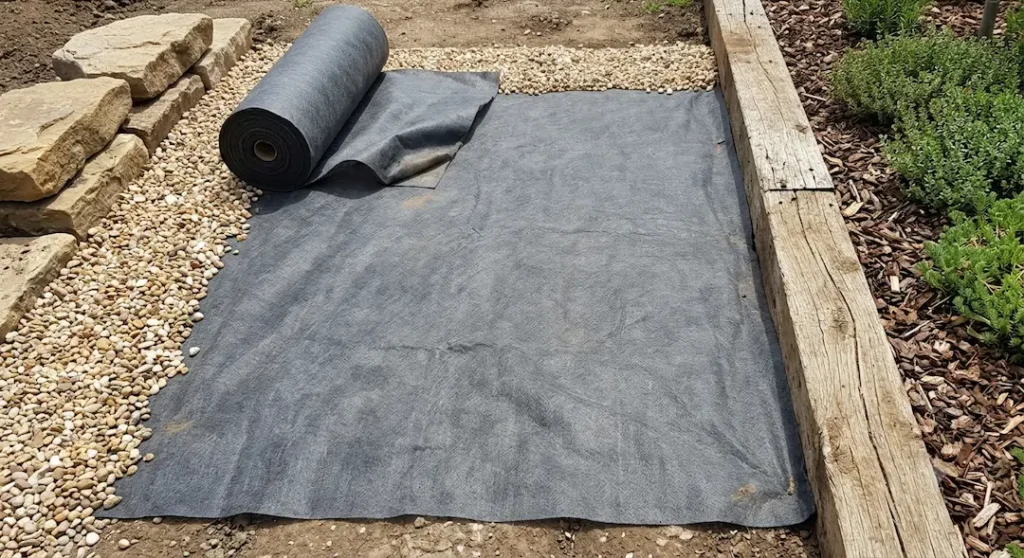
Step 3: Roll Out the Weed Control Fabric
Unroll your weed control fabric over the prepared bed. Overlap edges by at least 6 inches. Cut with a utility knife – don’t tear.
Step 4: Secure with Landscape Staples
Place a staple every 2–3 feet along edges and overlaps. For slopes or windy sites, space staples 12–18 inches apart. Drive staples flush with the fabric using a hammer.
Step 5: Cut X‑Shaped Holes for Plants
Where you want to install plants, cut a small “X” with your knife. Fold back the flaps, dig a hole, and plant through the fabric. Then close the flaps around the stem – this minimizes weed entry points.
Step 6: Cover with Mulch
Spread 2–3 inches of organic mulch over the entire fabric. Mulch weighs down the fabric, protects it from UV rays, and adds organic matter as it decomposes. Never leave landscape fabric bare – sun exposure degrades it within months.
Step 7: Maintain Annually
Inspect every spring. Pull any weeds that sprout in the mulch (they have shallow roots). Add fresh mulch as needed. After 5–8 years, replace the fabric.
Step‑by‑Step Installation for Driveways (Using Weed Membrane Heavy Duty)
For driveways, you need a weed membrane heavy duty – typically a non‑woven geotextile or a very thick (6+ oz) woven fabric. Solid plastic is not recommended because water cannot drain, leading to potholes and ice heaves.
Tools & Materials
- Heavy‑duty non‑woven geotextile (8–12 oz)
- Stakes or landscape staples
- Hammer
- Utility knife
- Base aggregate (¾‑inch crushed stone)
- Vibratory plate compactor (rental)
Step 1: Excavate Driveway Area
Remove topsoil to a depth of 8–12 inches, depending on expected vehicle weight. Slope the subgrade slightly (1–2%) for drainage.
Step 2: Install the Weed Suppressant Membrane
Roll out the weed suppressant membrane over the entire excavated area. Overlap seams by 12 inches. The fabric should extend up the sides of the excavation by 4–6 inches.
Step 3: Secure and Trim
Stake the fabric every 3 feet along edges and seams. Fold the excess fabric over the sides – this prevents weed intrusion from the edges.
Step 4: Add Base Aggregate
Dump 4–6 inches of crushed stone over the fabric. Spread evenly. Compact with a vibratory plate compactor. Then add another 4–6 inches and compact again.
Step 5: Top Layer (Optional)
For a finished driveway, add 2 inches of finer gravel or crushed asphalt. The fabric will remain below the compacted base, blocking weeds for 10+ years without chemicals.
Why this works: The heavy‑duty weed barrier fabric separates soil from stone, preventing weeds from rooting in the subgrade. Water drains through, so no puddling occurs. This is the professional, chemical‑free method used by landscapers.
Common Mistakes to Avoid with Landscape Fabric and Weed Membrane
Even the best weed control fabric fails if installed incorrectly. Avoid these pitfalls:
❌ Using solid plastic in a garden bed
Water cannot penetrate – plant roots drown, soil turns sour, and weeds often grow on top of the plastic in accumulated dust and debris.
❌ Leaving fabric uncovered
UV rays break down woven polypropylene in 6–12 months. Always cover with mulch, gravel, or soil. For solid weed membrane, UV damage is even faster.
❌ Not overlapping seams enough
Weeds find gaps. Overlap by a minimum of 6 inches (12 inches for heavy‑duty applications) and staple every 12 inches along seams.
❌ Installing fabric over existing perennial weeds
Bindweed, horsetail, and nutsedge can push through many fabrics. Kill these weeds first via solarization or repeated tilling, then install the barrier.
❌ Using lightweight fabric under driveways
Standard 3‑oz landscape fabric tears under gravel and vehicle weight. Invest in weed membrane heavy duty (non‑woven geotextile, 8+ oz) for driveways.
Environmental & Health Benefits of Physical Barriers
Choosing a physical barrier over chemical herbicides aligns with organic gardening principles:
- Zero runoff pollution – No glyphosate or other toxins entering groundwater.
- Safe for pets and children – Immediate use after installation.
- Protects pollinators – No drift onto flowering weeds that bees visit.
- Reduces plastic waste – Quality woven fabric lasts 5–8 years; solid plastic is often single‑use. Recycled polypropylene options are available.
For the most eco‑friendly approach, use jute or coir woven fabric (biodegradable after 2–3 years) in annual vegetable beds. For permanent landscaping, choose UV‑stabilized polypropylene – it can be removed and recycled at end of life.
FAQ: Landscape Fabric vs. Weed Membrane
Can I use landscape fabric under gravel?
Yes – woven weed barrier fabric works well under decorative gravel. Use 5‑oz or heavier weight. Avoid solid plastic because water will pool, creating mosquito habitat.
Which is better for a vegetable garden?
Weed control fabric (woven) is better. Solid plastic heats soil too much and blocks water. For veggies, also consider biodegradable paper mulch – it suppresses weeds and tills into the soil at season’s end.
Does weed membrane heavy duty stop horsetail or bindweed?
These aggressive perennials can penetrate many fabrics. For horsetail, you need a solid, thick plastic sheet (6 mil or more) with weighted edges, left for 2+ years – but that kills all soil life. A better chemical‑free method is repeated solarization or smother cropping.
How long does landscape fabric last?
Woven polypropylene lasts 5–8 years when covered with mulch. Solid plastic weed membrane degrades in 1–3 years. Non‑woven geotextile (heavy duty) can last 10–20 years under aggregate.
Can I reuse landscape fabric?
Yes, if it’s intact. Shake off soil, hose it down, and dry before re‑rolling. Check for holes – patch with fabric scraps or replace.
Conclusion: Make the Right Choice for Chemical‑Free Weed Prevention
Both landscape fabric and weed membrane offer effective, non‑toxic weed control, but they serve different purposes.
For garden beds, flower borders, and vegetable patches, choose woven weed barrier fabric (also called weed control fabric or weed suppressant membrane in permeable form). It lets water and air through, supports healthy soil, and lasts for years under a layer of mulch.
For driveways, heavy‑traffic paths, and long‑term aggregate installations, invest in weed membrane heavy duty – a non‑woven geotextile that blocks weeds while allowing drainage. Avoid solid plastic sheeting for any area where you want plants to thrive.
Remember to overlap seams, secure with staples, and always cover the fabric with mulch or stone.